
Selling, servicing, or installing a fire alarm, suppression system, or sprinkler system in Montana without a license is against state law, full stop. MCA 50-39-101 requires the business to hold a license and nearly every individual doing the work to hold a personal endorsement on top of it. Contractors coming from lightly regulated neighbors get caught out by this regularly, because the licensing agency isn't even the fire marshal.
Two agencies split the job
Enforcement and code work sit with the State Fire Marshal, housed in the Fire Prevention and Investigations Section of the Montana Department of Justice. Licensing sits with the Department of Labor & Industry, which runs the Fire Prevention Licensing Program. Local fire departments and code enforcement programs handle plan review and permits in their own territory; Great Falls, for example, runs its own fire alarm and sprinkler permit application. Keep both state relationships current and check permit rules city by city.
The license and endorsement structure
The statute's definitions in MCA 50-39-108 are broad. "Fire extinguishing system" explicitly means a sprinkler system conveying water, foam, or air, and the law also covers fire alarm systems, special agent suppression systems (dry chemical, CO2, foam, clean agent), and portable extinguisher servicing. What that means in practice:
- Company license from the Department of Labor & Industry, $200, per the Montana Fire Protection License Application.
- Individual endorsements, $100 each, for every non-apprentice employee who sells, services, or installs covered equipment. Qualifying paths include NICET Level II or higher, comparable ESA/NTS certification, a professional engineer license, an approved apprenticeship, or an equivalent credential from another state, per the program rules.
- Insurance filed with the application: $1,000,000 per occurrence in general liability for systems work, $500,000 for extinguisher-only servicing, per the application packet.
Endorsements are discipline-specific. A tech endorsed for extinguishers isn't endorsed for alarms, so map your crew's endorsements against the routes you actually run.
The code Montana enforces
Montana adopted the 2021 International Fire Code through ARM 23.12.601, with state amendments. That puts Montana on the IFC track rather than the NFPA 1 track used across New England, but the ITM obligations land in the same place: the IFC requires fire protection systems to be inspected, tested, and maintained under the NFPA standards it references. For scheduling purposes that means:
- NFPA 25 cycles for sprinklers and standpipes: quarterly, annual, and five-year internal work.
- NFPA 72 annual testing for alarm systems.
- NFPA 10 annual extinguisher maintenance plus 6-year and hydro intervals.
- NFPA 96 hood cleaning by cooking volume and semiannual kitchen suppression service.
Montana hasn't layered state-specific frequencies on top of these baselines in the fire code rule, but amendments change; verify against the current ARM text and your local AHJ before committing dates to a service contract.
Forms, tags, and reports
Montana has no statewide ITM reporting portal and no state-issued inspection report form for routine system work. Records follow the NFPA documentation requirements, stay with the building owner, and go to the local fire authority on request or per local ordinance. Where jurisdictions run their own permit programs, completion documents go back to that office. When a customer's insurance carrier, a city inspector, and the owner each want a copy in a different format, that's your office's problem to absorb, not the state's. Confirm each jurisdiction's expectations in writing; nothing in state rule stops a city from requiring more than the code minimum.
Where the reports actually go
Think of it as three destinations. Licensing paperwork and renewals go to the Department of Labor & Industry. Construction permits and acceptance tests go to the city or county running plan review, or to the State Fire Marshal's office where no local program exists. Routine inspection reports go to owners and local fire departments. A Billings crew servicing extinguishers, hoods, and alarms across three counties can easily touch five different report destinations in one week.
Keeping a Montana operation inspection-ready
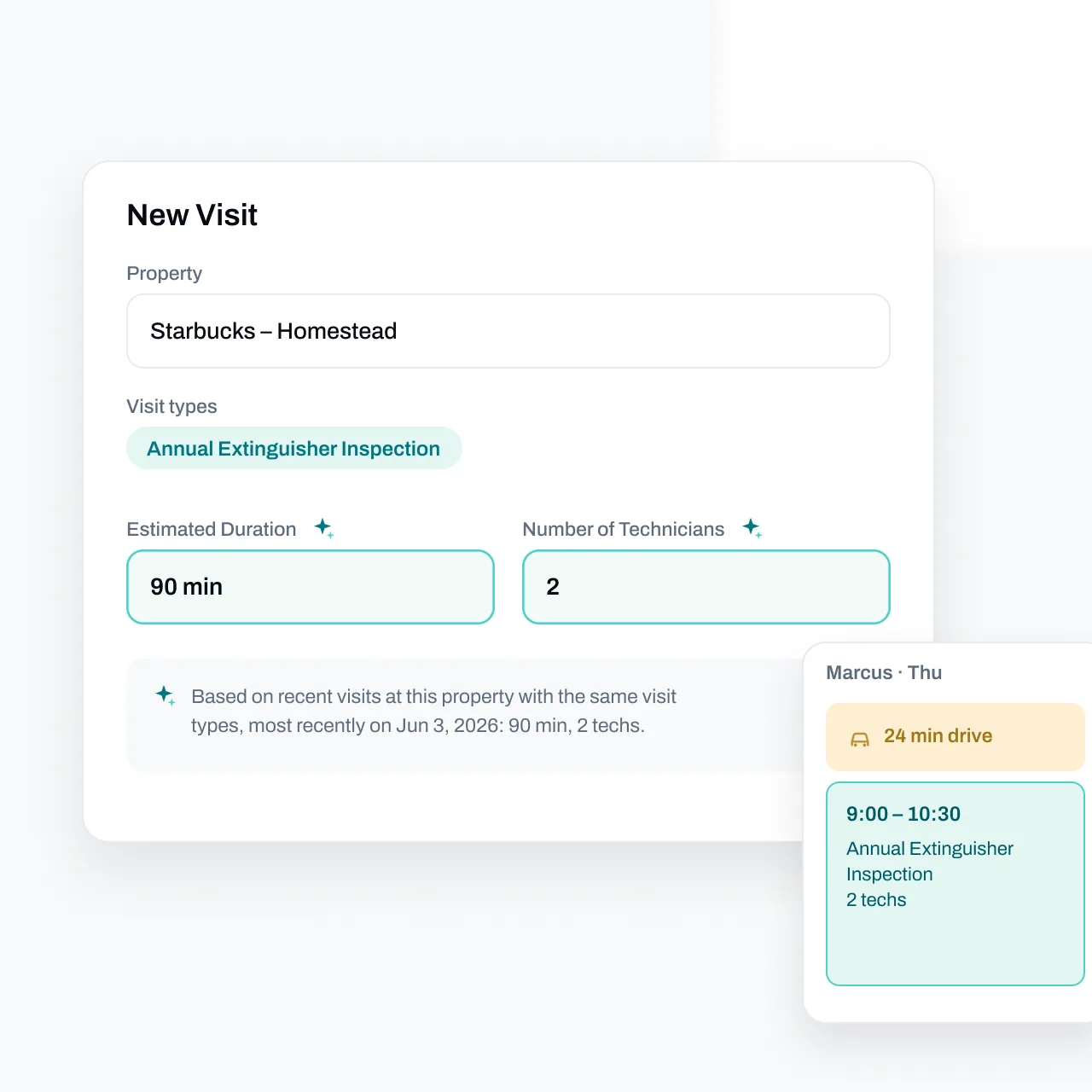
The paperwork burden here is discipline-by-discipline: endorsements per tech, insurance minimums per line of work, and separate report trails for alarms, extinguishers, and kitchen systems. Essential was built for exactly that mix. Route-based scheduling keeps annuals and semiannuals from slipping, techs record extinguisher inspections and kitchen suppression inspections on mobile with barcode-level asset history, and alarm test reports come out AHJ-ready with the tech's credentials attached. Get a demo and bring your endorsement roster; we'll show you how it maps to your service schedule.