
Arkansas is one of the few states where the fire code question has a single answer everywhere. The Arkansas Fire Prevention Code, 2021 edition, built from the 2021 International Fire Code, International Building Code, and International Residential Code as amended by the State Fire Marshal, took effect January 1, 2023. State law directs that districts, counties, and municipalities adopt and enforce only the AFPC. A Little Rock high-rise and a volunteer district in the Delta work from the same book, which is rare and genuinely useful for multi-county contractors.
Who regulates fire protection work in Arkansas
By operation of Act 254 of 1955, the Director of the Arkansas State Police serves as the State Fire Marshal and promulgates the AFPC (AFPC foreword). Enforcement runs through the Fire Marshal's Office at the state level and through local fire marshals and fire departments in their own jurisdictions. Because every AHJ enforces the same code, disputes tend to be about interpretation and local process rather than which edition applies.
Licensing: one board for systems, one agency for alarms
Arkansas splits its licensing between two bodies, and mixing them up delays real bids.
- Fire Protection Licensing Board, Department of Labor and Licensing. Firms and individuals installing, repairing, or inspecting portable fire extinguishers, fixed fire suppression systems, and water sprinkler systems must hold licenses from the Board under Ark. Code Ann. § 20-22-601 et seq. The sprinkler industry came under the Board through Act 702 of 1985.
- Responsible Managing Employee for sprinkler firms. Every licensed sprinkler contractor employs a full-time RME: at least 23 years old, holding NICET Level III in fire sprinkler work or a fire protection engineering degree plus three years of layout experience. Each drawing the firm executes requires the RME's authentication (Board sprinkler rules).
- Alarm companies license through Arkansas State Police Regulatory Services. Alarm systems companies operate under the licensing framework of Ark. Code Ann. § 17-40 (ASP Regulatory Services). The Class E license covers alarm system companies, and the Class E Unrestricted classification covers firms that install fire alarm systems required by the AFPC. Individual employees carry their own credentials under the same chapter.
If your shop does sprinklers and fire alarms, you're maintaining licenses with both agencies at once, on separate renewal cycles.
Forms, tags, and service documentation
Arkansas doesn't publish a statewide ITM report form or run a state filing portal for contractor inspection reports. The Board's industry rules set licensure and service standards for extinguisher, fixed system, and sprinkler work, and the AFPC's IFC base pulls in the NFPA maintenance standards for documentation. In the field that means completed reports and service tags follow NFPA formats, the owner keeps the records, and the local fire marshal gets copies on request or per local practice. Where the Board's rules and a local official's expectations seem to differ, confirm with both before you print tags; the Board can discipline licensees independently of anything the AHJ does.
Inspection frequencies under the 2021 AFPC
The AFPC's IFC base references the NFPA standards, so the schedule your customers must fund looks like this:
- Sprinkler and standpipe systems: NFPA 25 tasks from quarterly through annual, plus five-year internal inspections.
- Fire alarm systems: annual device testing under NFPA 72.
- Portable extinguishers: monthly checks, annual maintenance, and six- and twelve-year service under NFPA 10.
- Commercial kitchen systems: semiannual service under NFPA 96 and NFPA 17A.
Nothing in the AFPC relaxes these baselines, and local officials can require more frequent attention for problem occupancies.
How AHJs receive reports
Reports go to the fire official who inspects the property: a municipal fire marshal in the cities, county or district officials elsewhere, and the State Fire Marshal's Office for state-level enforcement. Delivery is still mostly email and paper across Arkansas. Treat each department's preference as a requirement, not a suggestion, and keep proof of delivery; a deficiency that never reached the AHJ reads like a deficiency you hid.
Staying compliant across the state
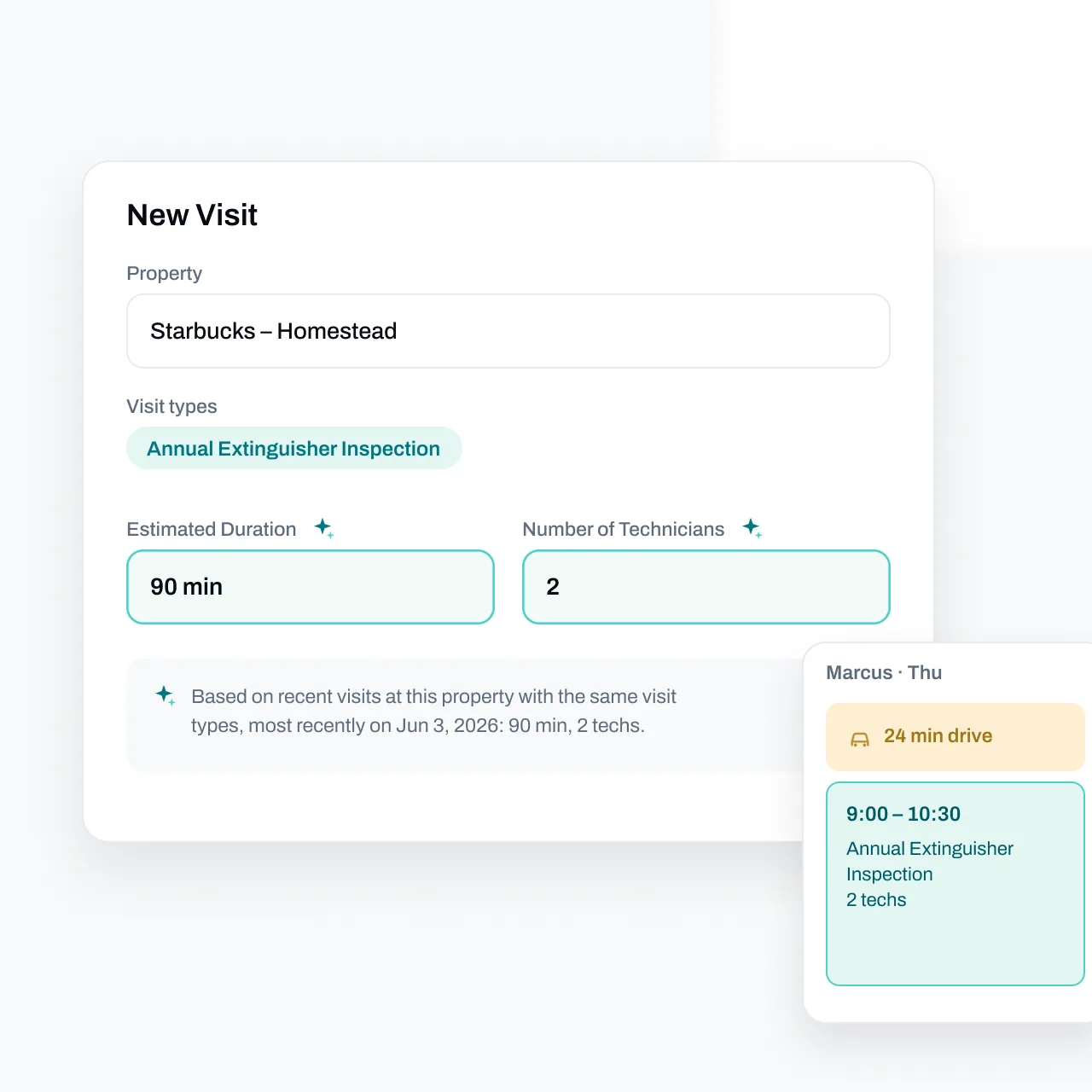
Take a Jonesboro sprinkler firm that wins a school retrofit plus annual inspections across three counties. The RME authenticates the drawings, the crews inspect to NFPA 25, and then the real work starts: three counties, three delivery preferences, one renewal calendar with two agencies on it. Essential keeps that machine running: automated recurring schedules, mobile inspections with NFPA 25 sprinkler forms and extinguisher checklists techs complete on site, and AHJ-ready reports with integrations into your accounting and office tools. Get a 30-minute demo and see how the report leaves the truck already formatted for the fire marshal.