
Illinois licenses sprinkler work and fire alarm work out of two different agencies. Sprinkler contractors and fire equipment distributors answer to the Office of the Illinois State Fire Marshal (OSFM). Alarm contractors hold a license from the Illinois Department of Financial and Professional Regulation (IDFPR). A shop running all three trades carries credentials from both agencies, on different renewal clocks, and then still has to satisfy whichever suburb it's working in that day. That split is most of what makes Illinois compliance harder than it looks.
Who regulates fire protection work in Illinois
The OSFM sets the statewide minimum through NFPA 101, Life Safety Code, 2015 edition, adopted with Illinois modifications effective January 1, 2020 under 41 Ill. Adm. Code 100.7. OSFM's Division of Fire Prevention also runs the contractor licensing programs and inspects specific building categories, such as state-owned buildings and licensed facilities.
That NFPA 101 floor is not a full statewide fire code. Municipalities adopt and enforce their own fire prevention codes on top of it, and OSFM's own FAQ points local questions back to the local authority. Day to day, your AHJ is the village or city fire prevention bureau, and two towns that share a border can enforce different code editions.
Three licenses, two agencies
Sprinkler companies need the OSFM-issued Fire Sprinkler Contractor license under the Fire Sprinkler Contractor Licensing Act (225 ILCS 317). The Act covers the business of "planning, selling, installing, maintaining, or servicing" sprinkler systems, so inspection-and-testing-only shops are in scope, not just installers. Licensing rules live in 41 Ill. Adm. Code 109, with a fee per business location.
Extinguisher and non-water suppression work runs through the Fire Equipment Distributor and Employee Regulation Act of 2011 (225 ILCS 217). Any company that services, recharges, hydrotests, inspects, or installs fire extinguishing devices or systems other than water sprinkler systems needs an OSFM distributor license, and the technicians doing the work need individual employee licenses under 41 Ill. Adm. Code 251. Kitchen suppression systems fall in this bucket too, which surprises alarm-and-sprinkler shops adding hood system inspections to their route.
Fire alarm work sits with a different agency entirely. Selling, installing, monitoring, altering, or servicing alarm systems, fire alarms included, requires a Private Alarm Contractor or Private Alarm Contractor Agency license from IDFPR under the Private Detective, Private Alarm, Private Security, Fingerprint Vendor, and Locksmith Act (225 ILCS 447). Those licenses expire May 31 every three years regardless of issue date.
Report forms, tags, and filings
Illinois doesn't publish a statewide ITM report form, and there's no central OSFM filing requirement for routine inspection reports on privately owned buildings. Your documentation follows the NFPA standards: NFPA 25 records for water-based systems, NFPA 72 inspection and testing documentation for alarms, and service tags on extinguishers. Extinguisher tags are regulated paper here; OSFM publishes guidance on reading fire equipment license numbers and identifying service tags by color and year, and an unlicensed tag is an easy citation for a state inspector.
If a local AHJ wants its own cover form or portal submission, that requirement wins. Ask before the first inspection, not after a rejected report.
Inspection frequencies that hold statewide
Because Illinois's minimum code is NFPA 101, the ITM cadence comes straight from the referenced standards. Water-based systems follow the NFPA 25 schedule of quarterly and annual inspections with five-year internal exams. Fire alarm systems test on the NFPA 72 periodic schedule, annual for most devices. Extinguishers get monthly quick checks, annual maintenance, and scheduled hydrostatic tests under NFPA 10, and hood systems follow NFPA 96, semiannual for a typical restaurant and more often for solid-fuel cooking. Local codes can tighten any of these, so treat the NFPA numbers as the floor and confirm the edition your AHJ enforces.
Where your reports actually go
It depends on the suburb, and the differences are real. Elk Grove Village routes third-party inspection reports through The Compliance Engine, the Brycer platform that happens to be headquartered down the road in Lisle. Belvidere collects ITM reports through its First Due portal. Plenty of departments still take a PDF by email. One tech can leave the shop with three towns on the schedule and three different submission paths for the same NFPA 25 report, each with its own login and its own deficiency follow-up trail.
Staying compliant when every suburb runs its own show
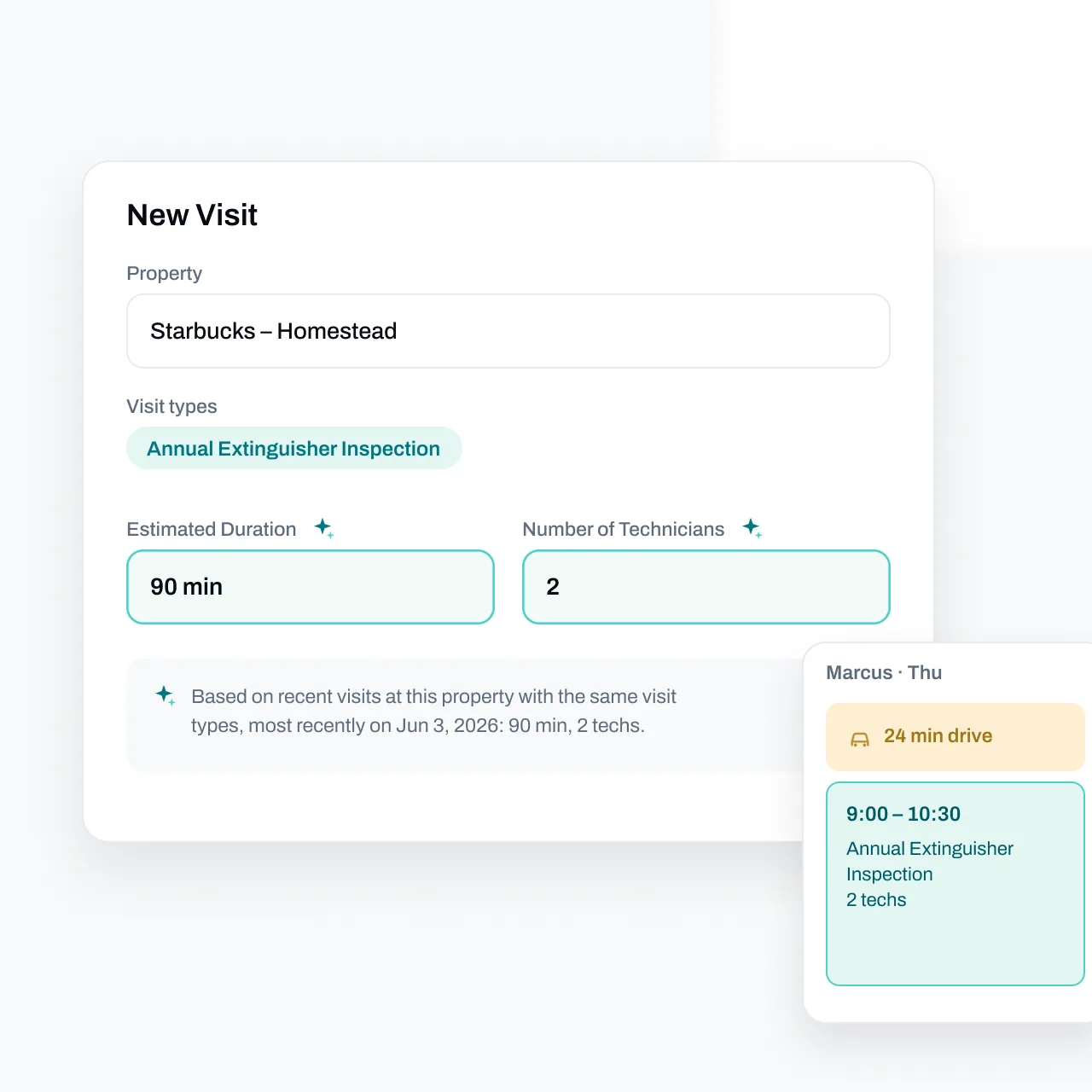
The work in Illinois isn't hard because the standards are exotic. It's hard because the licensing is split, the code editions vary block by block, and every fire prevention bureau collects paper its own way. Essential handles the repetitive part: it schedules recurring inspections on the NFPA frequency for each system, walks techs through sprinkler, fire alarm, and extinguisher inspections on mobile, and produces an AHJ-ready report the moment the tech hits submit. For towns on Brycer, Essential files the report to The Compliance Engine directly through its integrations, so nobody re-keys data at the office at 6 p.m. If your techs cross suburb lines every day, book a 30-minute demo and watch one inspection go from truck to AHJ without a second touch.