
Missouri has no statewide fire code. The Division of Fire Safety says so directly: fire and building codes are adopted at the local level, and there's no state requirement for an annual fire inspection unless a facility is regulated by a state licensing agency. For a fire protection contractor, that one fact reshapes everything: your compliance obligations change at the city limits.
Kansas City, St. Louis, and Springfield each maintain their own codes and their own expectations. A rural county may have adopted nothing at all. The contractors who do well here treat every jurisdiction like its own small state.
Who oversees fire protection in Missouri
The Missouri Division of Fire Safety (DFS), under the Department of Public Safety, houses the State Fire Marshal. Its inspection authority is narrow by design: DFS runs a fire safety inspection program for state-licensed facilities such as day cares and care homes, along with elevator, boiler, amusement ride, and fireworks programs. Routine commercial fire inspections belong to municipal fire departments and fire protection districts, wherever a local code gives them that authority.
So the AHJ question, always worth asking, matters double in Missouri. Before quoting ITM work, find out which code the city or district has adopted, and which edition. The answer determines what your report needs to prove.
Licensing changes city by city
Missouri issues no statewide license for sprinkler, fire alarm, or extinguisher contractors. Licensing lives with local boards, and the big metros take it seriously. The City of St. Louis, for example, licenses sprinkler contractors and fitters through its Sprinkler System Contractors Board of Examiners. St. Louis County, Kansas City, and several other metro jurisdictions run their own trade licensing and examiner programs; treat each as a separate credential to acquire and renew.
Three practical rules for working across the state:
- Call the building department or fire marshal in every new jurisdiction before you bid, and ask what licenses and permits apply.
- Hold NICET certifications even where nobody mandates them. In a state without state licenses, they're the credential AHJs and general contractors recognize.
- Track renewal dates per jurisdiction. Two lapsed city licenses can quietly lock you out of a metro market.
Codes and standards: what applies where
Where a Missouri city has adopted a fire code, it's typically an edition of the IFC with local amendments, and that code enforces the NFPA maintenance standards: NFPA 25 for water-based systems, NFPA 72 for alarms, and NFPA 10 for extinguishers. Where no local code exists, NFPA schedules still follow the building in through insurance carriers and through state rules covering licensed day cares, nursing homes, and similar facilities. Editions vary town to town, so confirm before citing section numbers.
Reports and tags AHJs expect
No Missouri agency publishes a required statewide ITM form, and no state statute defines a tag layout, so don't let anyone sell you one as mandatory. What works: NFPA-format inspection and test reports, extinguisher service tags with the technician, firm, and service dates per NFPA 10, and a copy retained for the owner. Individual departments may want their own cover sheet or a specific delivery method, and that instruction beats any generic advice on this page.
Inspection frequencies worth building the calendar on
The NFPA baselines hold statewide because nothing at the state level overrides them: quarterly and annual sprinkler tasks, annual alarm testing, monthly extinguisher checks with annual maintenance, and the long-cycle work (internal pipe assessments, hydros, six-year teardowns). Since local amendments can shift specifics, lock the frequency per building with the AHJ once, then automate the recurrence.
Electronic submission is spreading
Even without a state mandate, Missouri departments are moving contractor reports online. The Sedalia Fire Department has published a Compliance Engine implementation plan covering the systems it tracks and how service providers submit test reports through Brycer's portal. Once a department flips that switch, emailed PDFs stop counting. Watch for the same move in other Missouri cities, and ask every AHJ how they want reports delivered.
Running one operation across fifty rulebooks
A mid-Missouri shop might tag extinguishers in Columbia, test alarms in Jefferson City, and inspect sprinklers in Sedalia in the same week, three towns, three sets of rules, and one town that wants everything in TCE. The compliance risk isn't any single requirement. It's the office whiteboard trying to hold them all.
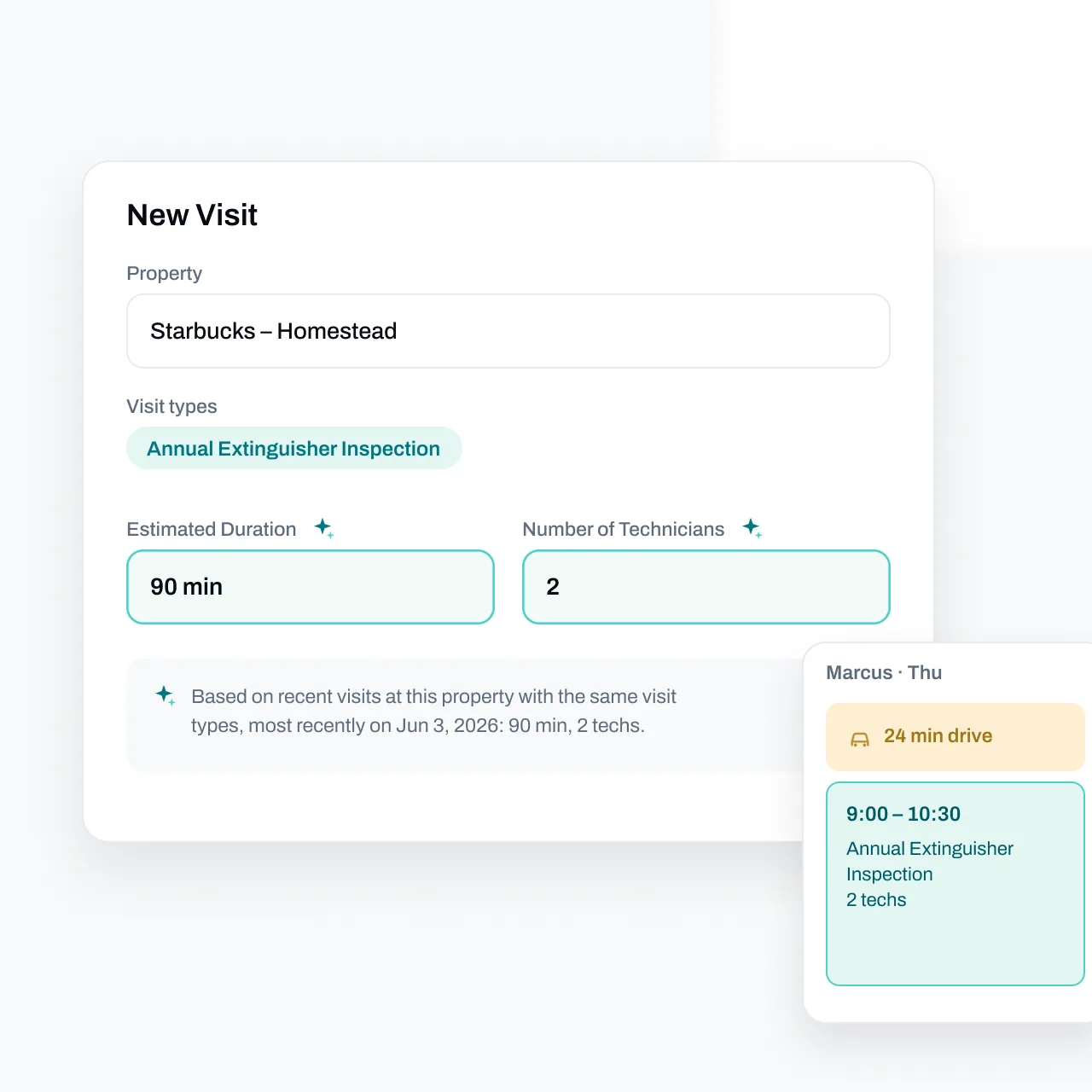
Essential keeps the per-jurisdiction details attached to each customer site: inspection schedules recur on the right frequency, techs file extinguisher inspections and kitchen suppression reports from their phones, and AHJ-ready reports can go straight to The Compliance Engine via our integrations where a department like Sedalia's requires it. Get a 30-minute demo and see how much of that whiteboard disappears.