
Ask three techs how often a smoke detector needs attention under NFPA 72 and you'll get three answers. Usually that's because they're each thinking of a different table. The code defines two separate schedules: inspection frequencies in Table 14.3.1, which are visual checks, and testing frequencies in Table 14.4.3.2, which are functional verification. They are not the same thing, and an ITM program that only tracks one of them is out of compliance even if every test passes.
Inspection vs. testing: two tables, two clocks
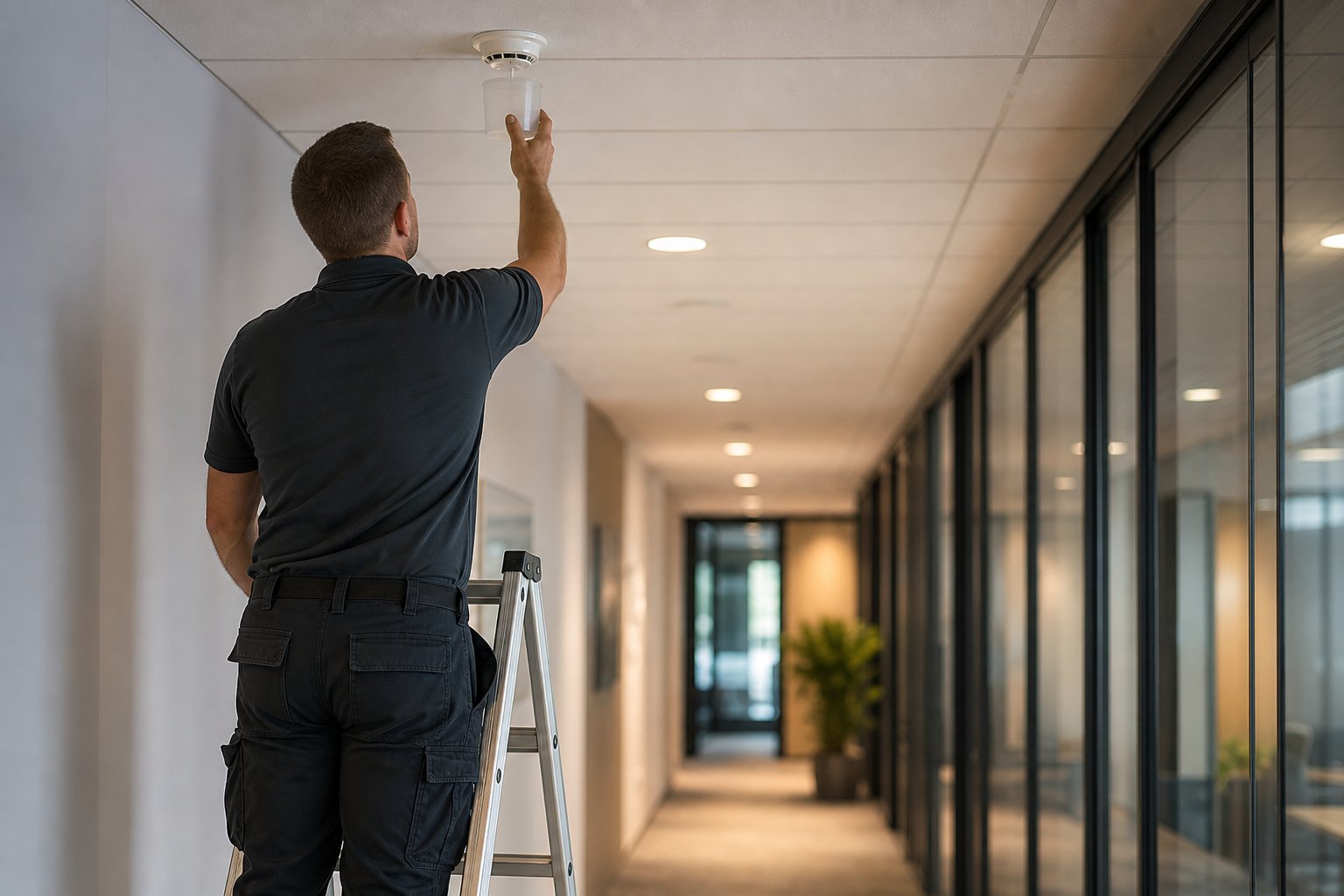
An inspection confirms a device is in place, undamaged, and free of anything that would keep it from working. Dust cover on a detector, paint on a strobe, boxes stacked in front of a pull station. A test makes the device prove it functions. Same device, two different obligations, each on its own clock.
The frequency tables in the current editions put the equipment you touch on this cadence:
- Weekly inspection: control equipment — fuses, LEDs, power supplies, trouble signals — in buildings without constant monitoring for alarm, supervisory, and trouble signals. Monitored control equipment drops to annual.
- Quarterly inspection: radiant energy detectors (flame and spark/ember) and video image smoke and fire detectors — the two categories the 2022 committee deliberately kept quarterly when everything else moved.
- Semiannual visual inspection: initiating devices, including smoke detectors, heat detectors, duct detectors, and manual pull stations; notification appliances; and control valve supervisory and waterflow devices, which the 2022 edition moved from quarterly.
- Annual functional test for most initiating devices and notification appliances — but waterflow devices and valve supervisory switches are tested semiannually, on the same visit as their semiannual inspection.
- Smoke detector sensitivity testing: within one year of installation, then every alternate year after that, per §14.4.4.3. Canned smoke doesn't satisfy it — that verifies function, not sensitivity.
Confirm the exact rows in the edition your AHJ enforces before you commit a schedule to a contract. Editions move device categories around: the 2022 edition is the one that shifted supervisory and waterflow visuals to semiannual, and the 2025 cycle left Chapter 14's frequencies where they were.
Where contracts go wrong
The classic failure: a shop sells an annual test-and-inspect and quietly skips the semiannual visuals. Everything passes at the annual, the report looks clean, and nobody notices until an AHJ or an insurer asks for the semiannual records. Now the building owner learns their contract never covered half the required program, and they learn it from the fire marshal instead of from you.
Run it the other way. A contractor who prices the semiannual visit separately has a second touchpoint on every building, a shorter list of surprises at the annual, and a defensible answer when the records request comes in.
The records are the compliance
NFPA 72 expects ITM records to be kept and produced on request. A passed test with no record is, for enforcement purposes, a test that didn't happen. That means device-level history: what was inspected, what was tested, when, by whom, and what was found. On a mid-rise with several hundred initiating devices, paper binders and spreadsheet tabs stop being a filing nuisance and start being the thing that decides whether you keep the account.
One note for crews working both sides of the border: NFPA 72 governs US buildings. In Canada the inspection standard is CAN/ULC-S536, and Ontario moved to the 2019 edition in January 2026, so don't carry one country's frequencies into the other's paperwork.
Put the schedule where it can't be forgotten
Frequency compliance is a memory problem, and memory problems are what software is for. Essential tracks every device with its own inspection and test history, schedules the semiannual and annual work automatically, and generates the report from what the tech records on site through the mobile inspection app. If your semiannual visits live in someone's head today, book a 15-minute walkthrough and see what a device-level ITM program looks like when nothing depends on remembering.
Track every NFPA 72 inspection cadence automatically
Essential is purpose-built fire alarm inspection software that tracks due dates across monthly, quarterly, semi-annual and annual cadences — so nothing slips.