
A smoke detector responding to test smoke doesn't establish that it's operating within its listed sensitivity range. Smoke detector sensitivity testing needs its own method, record, and due date in your commercial fire alarm program.
What NFPA 72 requires for sensitivity intervals
A 2023 VA life-safety survey quotes the sensitivity provisions in NFPA 72 (2019), Section 14.4.4.3. For the system smoke detectors covered by those provisions:
- Check sensitivity within one year after installation.
- Check it every alternate year afterward.
- After the second required calibration test, an interval of up to five years may be permitted when results show the detector remains within its listed and marked range.
The extension requires nuisance-alarm records and trend monitoring. An increase over the previous year calls for sensitivity testing in the affected zones or areas. Confirm the adopted edition and extension conditions before assigning a five-year date.
These provisions concern system smoke detectors outside one- and two-family dwelling applications. Household smoke alarms have their own requirements.
Use a method that can establish sensitivity
The VA survey also quotes NFPA 72's prohibition on treating unmeasured smoke or aerosol concentration as a sensitivity measurement. Triggering an alarm alone doesn't establish the detector's sensitivity.
A CMS finding citing NFPA 72 (2010) lists permitted methods, including calibrated equipment, the manufacturer's calibrated sensitivity instrument, and listed control equipment arranged for the purpose. Check your adopted edition and equipment documentation; “addressable” alone doesn't establish that panel diagnostics satisfy the requirement.
Before dispatch, confirm the method supported by the detector and control-unit models. Check the tools and access arrangements. Discovering a tool mismatch after the lift arrives wastes the test window.
Keep three results separate
A device record should distinguish its visual condition, its functional test result, and its sensitivity result. Use the fire alarm frequency guide to review the wider inspection program, then attach the sensitivity task to the individual detector.
For a numerical sensitivity measurement, record the units, the result, and the applicable acceptance range. For an approved listed method that reports an in-range status, preserve the method's required output and documentation. Don't invent a numerical reading just to fill a box.
“Pass” without a method or supporting record leaves the office chasing the technician who performed the work.
A sensitivity-test record worth keeping
Use this handoff checklist for each detector:
- Property, system, device address or asset ID, and physical location.
- Detector manufacturer and model, with installation date where established.
- Test date, technician, and the procedure used.
- Instrument or listed system used, with any required calibration or supporting documentation.
- Measured result and acceptance range, or the documented result from the applicable listed method.
- Corrective work, retest outcome, and next due date with its basis.
Keep prior results and nuisance-alarm history available when reviewing an extended interval. If records arrived as scanned PDFs, verify the device identities and dates before using them to set a new schedule.
Handle out-of-range devices and missing history
The provisions quoted in the VA survey call for out-of-range detectors to be cleaned and recalibrated or replaced, with an allowance for listed field-adjustable devices. Follow the manufacturer's procedure and document the result after corrective work.
Suppose you take over an office building with 64 smoke detectors. The old reports show annual functional tests, but the sensitivity columns are blank. The building manager remembers “everything passing.” That recollection doesn't establish the test method, prior sensitivity results, or eligibility for an extended interval.
Request the missing records. If they're unavailable, resolve the testing and schedule with the responsible parties. Record the gap; don't assign an unsupported five-year date.
When one detector is replaced, preserve the removed device's history and record the new unit's installation. The replacement needs its own schedule; the building's age doesn't determine the detector's age.
Keep sensitivity work visible between annual visits
A separate task and report field make sensitivity work easier to price, schedule, and audit. They also make it easier to explain to a customer who assumes last year's functional test covered it.
Essential's fire alarm inspection software supports device records and configurable service cadences. Once your team establishes the sensitivity interval, track that service separately from the annual functional test. Keep the supporting test record available when reviewing the next due date.
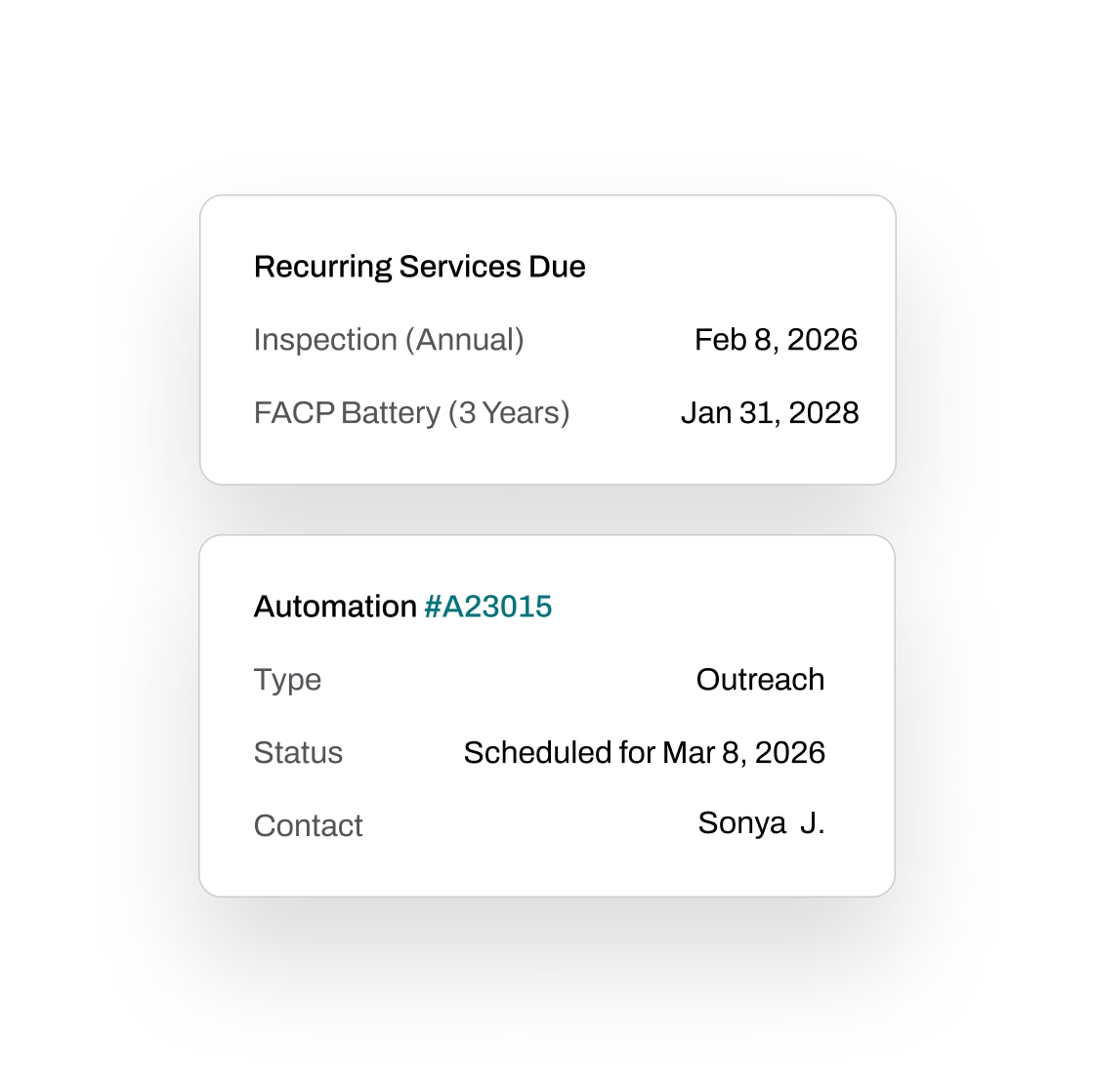
Changing a recurrence setting doesn't establish eligibility for a five-year sensitivity interval. That decision still needs the test history and nuisance-alarm review described above. Our fire alarm inspection workflow guide covers the wider visit.
Book a 30-minute demo to see how separate service cadences and device records can keep sensitivity work visible between annual visits. We'll use a sample alarm property so you can compare the setup with your current scheduling process.