
Washington splits fire protection oversight three ways. Sprinkler contractor licensing sits with the State Fire Marshal's Office inside the Washington State Patrol. Fire alarm work rides on the electrical licensing system at Labor & Industries. And the fire code itself comes from the State Building Code Council, which adopted the 2021 International Fire Code with Washington amendments effective statewide on March 15, 2024 (WAC 51-54A, 2021 Washington State Fire Code). Learn which of the three you're dealing with and the state gets much easier to work in.
Who regulates fire protection work in Washington
The State Building Code Council adopts and amends the fire code under its legislative delegation; it applies in every county and city. Local fire marshals and fire departments enforce it building by building. The Washington State Patrol State Fire Marshal's Office handles statewide licensing for the sprinkler trade and certification of the people doing the work.
Licensing: three doors depending on your trade
Sprinkler contractors: licensed by the State Fire Marshal
RCW 18.160 sets up four license levels, each requiring at least one certificate of competency holder on staff (WSP SFMO):
- Level 1: NFPA 13D systems in single- and two-family residential structures
- Level 2: residential structures up to four stories, NFPA 13D and 13R
- Level 3: any structure: NFPA 13D, 13R, 13, and 24 work
- Level U: underground dedicated fire protection supply mains under NFPA 24
Certificates of competency for Levels 1 through 3 lean on NICET Water-Based System Layout certification, and Level U runs on a state exam. Certificates renew annually before January 1 (RCW 18.160.050). The people installing pipe have their own credential: sprinkler fitter certification under RCW 18.270.
Alarm companies: electrical licensing plus local certification
Fire alarm installation is electrical work in Washington. Companies carry a specialty electrical contractor license — the limited energy system (06) specialty covers low-voltage fire protection signaling circuits (WAC 296-46B-920). Cities then layer their own requirements for testing personnel on top.
Extinguisher and hood techs: certification is local
Washington's state-level licensing centers on the sprinkler trade; for extinguishers and kitchen systems, look to your city. Seattle is the clearest example. The Seattle Fire Department runs its own certification program with categories such as FEX-1 through FEX-4 for portable extinguisher work (from full service down to hydrostatic testing) and kitchen hood suppression certifications requiring NICET Level II or ICC/NAFED credentials.
Confidence test reports: the paperwork that defines the state
In Seattle, periodic ITM reports are called confidence test reports, and the city leaves nothing to interpretation. Work must be performed by SFD-certified technicians, and reports go to the fire department electronically through The Compliance Engine within seven calendar days of completing the inspection, with a $35 annual filing fee per system type and a late penalty on top (Seattle Fire Department systems testing). One quirk worth knowing: Seattle requires annual extinguisher servicing but doesn't take extinguisher reports through the portal.
Seattle isn't alone. Longview has required contractors to send all inspection, testing, and maintenance reports through The Compliance Engine since September 15, 2020, covering 15 system types from alarms and sprinklers to hood systems, private hydrants, and fire pumps (Longview Fire Department). Other Washington cities take paper, email, or their own portals — confirm with each AHJ before assuming.
Inspection frequencies
The NFPA baselines apply through the fire code: quarterly and annual NFPA 25 tasks for water-based systems, annual NFPA 72 alarm testing, and monthly-plus-annual NFPA 10 extinguisher care. Seattle's published schedule shows how an AHJ builds on that: annual confidence tests for alarms, sprinklers, fire pumps, and emergency generators; hood systems every six months; standpipes and fire escapes every five years (SFD schedule).
Where the deadline actually bites
A hood crew finishing a 6 a.m. service at a Seattle restaurant hasn't finished the job when the wrench goes back in the truck. The report has seven days to reach the fire department through the portal, and each six-month service triggers its own filing. A crew running eight hoods a day generates forty-plus filings a week — miss a handful and the late penalties and unhappy AHJ arrive together. That administrative tail, not the field work, is where Washington contractors most often slip.
Staying compliant in Washington
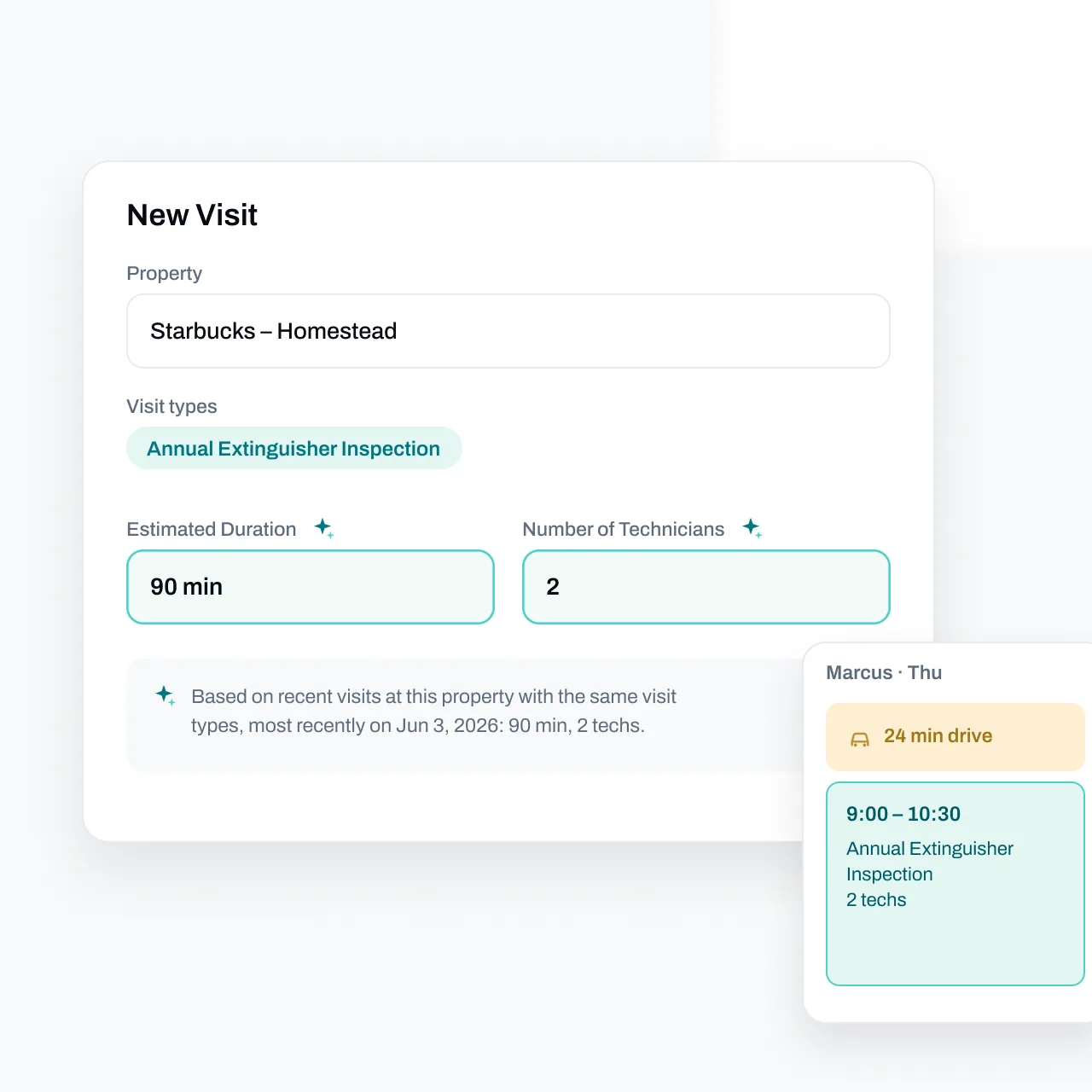
Essential was built for exactly this split-system state: recurring schedules track every six-month hood cycle and annual confidence test, techs complete kitchen suppression and sprinkler inspections on mobile, and finished reports come out AHJ-ready. For Seattle, Longview, and other TCE cities, the Compliance Engine integration files reports inside the seven-day window without your office touching them twice. If confidence-test season means overtime at a desk, take the 30-minute demo and see the filing handled from the truck.