
Virginia handed contractors a new rulebook on January 18, 2024, when the 2021 Statewide Fire Prevention Code took effect, built on the 2021 International Fire Code with state amendments. Companies expanding into Virginia rarely stumble over the code text. They stumble over the enforcement structure: it's a local option, and every county line you cross can change who your AHJ is and how they want inspection reports delivered.
Who regulates fire protection work in Virginia
The Board of Housing and Community Development writes the SFPC, and the Department of Housing and Community Development publishes it. Enforcement then splits. Under Virginia Code § 27-98, any local government may enforce the Fire Prevention Code, and the State Fire Marshal has enforcement authority "in those jurisdictions in which the local governments do not enforce the Code." In practice, Northern Virginia counties and most cities run their own fire marshal's offices, while the State Fire Marshal's Office covers localities that opted out.
Before quoting a new Virginia account, find out which fire marshal's office holds jurisdiction over that address.
Licenses you need before you inspect
Trade licensing runs through the Department of Professional and Occupational Regulation's Board for Contractors, which issues Class A, B, and C licenses tied to experience (five, three, and one year respectively) and monetary limits, with specialty designations defining scope (Board for Contractors regulations). Two specialties matter most here:
- Fire sprinkler contracting (SPR): installation, repair, alteration, addition, testing, maintenance, inspection, improvement, or removal of water-based sprinkler systems. The SPR designation doesn't cover other suppression system types.
- Fire alarm systems contracting (FAS): the specialty covering fire alarm work.
On the extinguisher side, the SFPC's portable fire extinguisher provisions require service personnel conducting maintenance to hold a valid certificate issued by an approved agency for the type of work performed (SFPC § 906). Local fire marshals decide which certifying organizations they accept, so confirm before you send a new tech out solo.
Required forms and reports: county by county
Virginia doesn't publish a single statewide ITM report form. What it has instead is county-level infrastructure. Fairfax County's fire marshal publishes code reference packages spelling out local expectations for fire protection systems. Arlington County went further: effective October 1, 2023, its Office of the Fire Marshal requires that "all compliant & non-compliant fire protection systems test reports" be submitted electronically through The Compliance Engine, with service providers required to register and pay a filing fee per submittal.
Note the wording in Arlington's mandate — non-compliant reports too. Sitting on a deficiency report until the fix is sold isn't an option there; the fire marshal sees the deficiency when you file. Where no local mandate exists, keep records per the referenced NFPA standards and deliver them the way that fire marshal's office asks. When in doubt, ask the AHJ directly rather than assuming the next county works like the last one.
Inspection frequencies under the SFPC
The SFPC keeps systems on the schedules of the standards it references in Chapter 9 of the 2021 code:
- NFPA 25 quarterly and annual tasks for sprinkler and standpipe systems
- NFPA 72 annual testing for fire alarm systems
- NFPA 10 monthly visuals and annual maintenance for portable extinguishers
Local fire marshals inspect buildings on their own cycles on top of this, and they check whether your customer's ITM records are current when they do.
Where reports go: one test, two delivery systems
An alarm company runs annual tests for a property group with buildings in Fairfax and Arlington. The NFPA 72 test is identical in both. The paperwork isn't. The Fairfax reports follow that county's documented expectations; the Arlington reports must land in The Compliance Engine within the required window, fee attached, deficiencies visible. Multiply that by every jurisdiction a Virginia contractor touches — county fire marshals, city offices, State Fire Marshal territory — and report delivery becomes its own workflow problem separate from the inspection work itself.
Staying compliant across Virginia jurisdictions
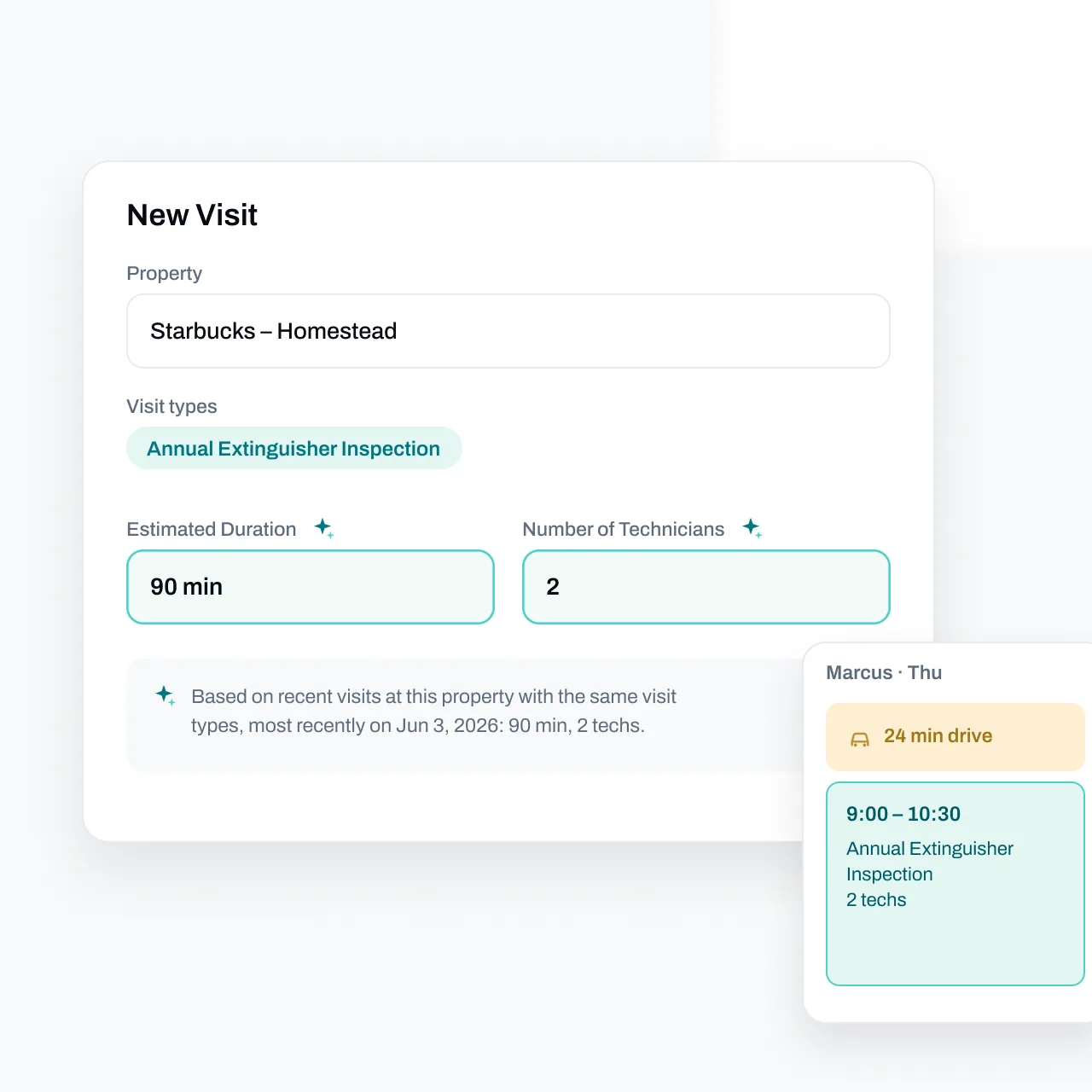
The contractors who grow in Virginia treat jurisdiction rules as data, not tribal knowledge. Essential keeps each customer's AHJ and delivery method on the account, schedules every NFPA interval automatically, and lets techs complete alarm and sprinkler inspections on their phones with reports formatted for the receiving fire marshal. For Arlington and other TCE jurisdictions, Essential's Compliance Engine integration sends finished reports straight into the portal instead of making your office re-key them. If county-by-county paperwork is eating your admin hours, book a 30-minute demo and watch the Arlington-versus-Fairfax scenario handled once, correctly.