
A New Mexico contractor's license by itself doesn't let you tag a sprinkler system. Under 10.25.2 NMAC, no person may install, inspect, maintain, service, tag, or repair fire protection equipment unless they hold a Certificate of Fitness from the State Fire Marshal. Out-of-state shops bidding work in Albuquerque or Las Cruces run into this rule constantly, usually after the bid is already in.
Who regulates fire protection work in New Mexico
The State Fire Marshal's Office sits inside the Department of Homeland Security and Emergency Management. Its Code Enforcement Bureau handles plan review, annual inspections, final acceptance testing, and Certificates of Fitness, and it signs memoranda of understanding with local fire departments so that cities like Albuquerque and Santa Fe enforce the fire code through their own fire marshal offices.
The statewide fire code is the 2021 International Fire Code, adopted through 10.25.5 NMAC. The state adopts IFC appendices D and I; any other appendix applies only if your local AHJ adopts it. So the base rules are consistent statewide, but always check for local amendments before you quote recurring inspection work.
Two layers of licensing: CID, then a Certificate of Fitness
New Mexico splits fire protection credentials between two agencies, and you need both layers.
First, the company needs the right contractor classification from the Construction Industries Division under 14.6.6 NMAC. Per the State Fire Marshal's own Certificate of Fitness application, that means MS-12 (Fire Protection Sprinkler) for sprinkler work, MS-14 (Dry Chemical Fire Protection) for chemical suppression systems, and ES-3 (Low Voltage Special Systems) or EE-98 (Residential and Commercial Electrical) for fire detection and alarm systems. The qualifying party must be on your payroll, not a subcontractor.
Second, the company applies to the Fire Code Enforcement Bureau for a Certificate of Fitness endorsement in each discipline it works in:
- Automatic fire sprinkler systems, fire pumps, and standpipes
- Automatic fire detection and alarm systems
- Chemical fire suppression systems (UL 300 kitchen systems, clean agents, and similar)
- Portable fire extinguishers
- Fire and smoke dampers
A Las Cruces extinguisher shop that wants to start servicing restaurant hood systems learns how this bites. Before the first UL 300 job, it needs the MS-14 classification from CID and a chemical suppression endorsement on its Certificate of Fitness. Skip either one and every tag the tech hangs is a violation.
Forms and filings to keep straight
The Certificate of Fitness application is emailed to the bureau with supporting documentation: the CID license, proof of training, and manufacturer certifications where they apply. Renewals require the same documentation, so keep those records current rather than rebuilding the file every cycle.
On the systems side, the State Fire Marshal's plan submittal package requires the installing contractor to provide the NFPA 72 (2019 edition) Record of Completion before scheduling a final acceptance test on a fire alarm system. For routine inspection, testing, and maintenance, New Mexico doesn't publish a single statewide report form. Use reports that follow the applicable NFPA standard, keep your tags consistent with your Certificate of Fitness, and confirm the format your AHJ wants before the first visit.
How often systems get inspected
Because the state runs on the 2021 IFC, inspection and testing schedules come from the NFPA standards the code references: NFPA 25 for water-based systems, NFPA 72 for fire alarms, and NFPA 10 for portable extinguishers. In practice that means annual testing as the backbone, with quarterly and monthly items layered on for sprinkler components and extinguishers. Local AHJs can inspect a property at any time, and Certificate of Fitness holders agree to be inspected by the fire marshal's designees during business hours.
Where reports go
New Mexico has no statewide electronic reporting portal. Completed reports stay with the building owner, and the AHJ reviews them during its own fire inspections or on request. In MOU cities, that AHJ is the municipal fire marshal's office; elsewhere it's the state Code Enforcement Bureau. When a system fails, document the deficiency, notify the owner in writing, and keep proof. The bureau can pull your records when your certificate comes up for renewal.
Staying compliant without drowning in paperwork
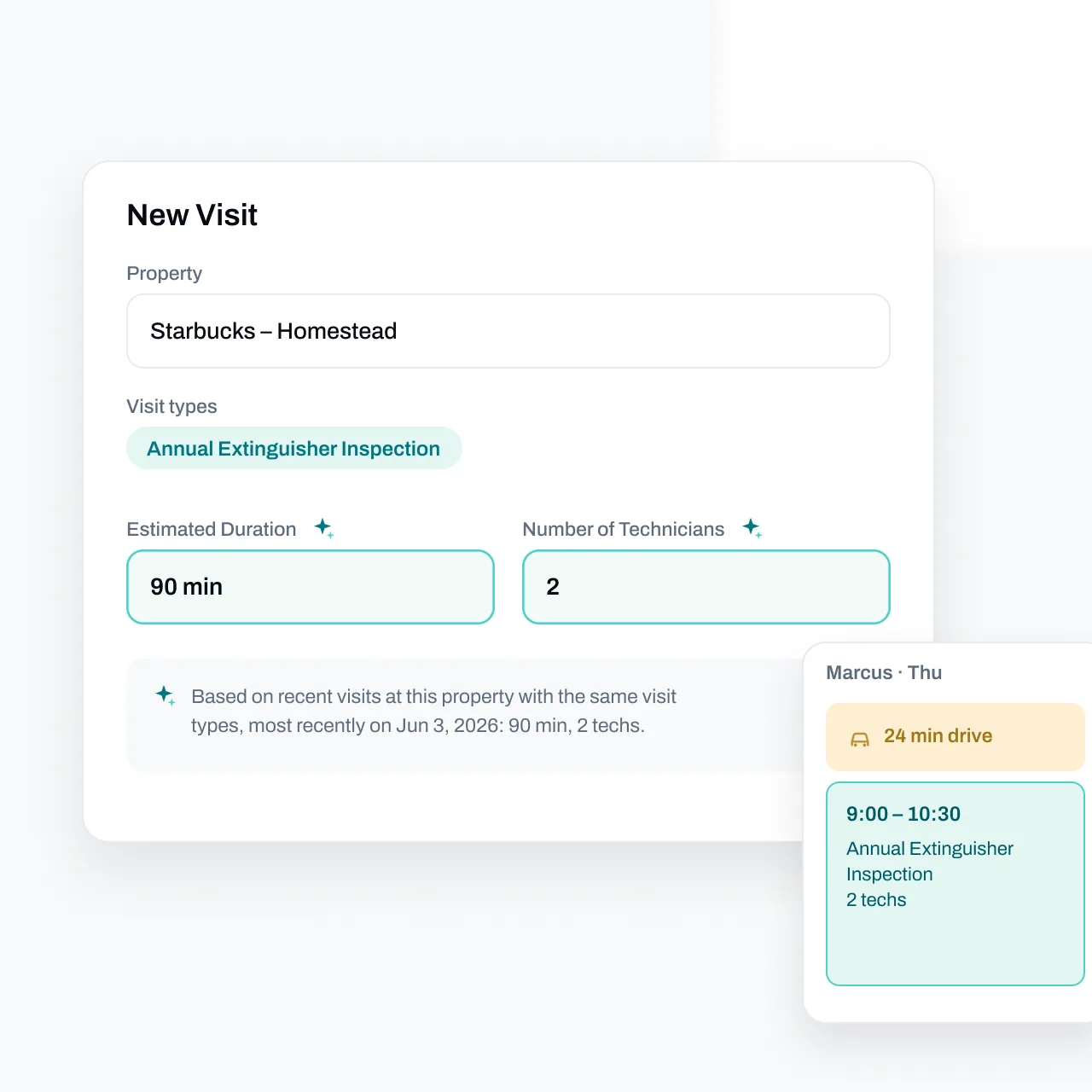
Between CID renewals, Certificate of Fitness documentation, and NFPA-driven inspection cycles across five disciplines, a New Mexico fire protection company carries more credential overhead than most states demand. Essential handles the recurring part: automated scheduling for every monthly, quarterly, and annual cycle, mobile sprinkler inspections built on NFPA 25, and fire alarm reports your AHJ can accept without a follow-up call. Techs finish the report on site, and the office keeps a clean record for renewal season. Book a 30-minute demo and bring your messiest inspection route.