
Hang a yellow tag on a compliant sprinkler system in Texas and you've just certified, in writing, that it's out of compliance. Texas regulates tag color down to the shade and the dimensions: the passing annual ITM tag is light blue, yellow means documented deficiencies, and red means an emergency impairment. Get the colors wrong and the local fire marshal reads a story you didn't mean to tell.
The system behind those tags is licensing-first. Texas has no single statewide fire code; instead, the State Fire Marshal's Office at the Texas Department of Insurance licenses the companies and individuals who do the work, and its rules dictate the standards, tags, and notices that follow every inspection.
Who regulates fire protection work in Texas
TDI's State Fire Marshal's Office licenses four industries: fire alarm, fire extinguisher, fire sprinkler, and fireworks. Code enforcement, though, belongs to cities and counties. Most Texas municipalities adopt the International Fire Code, a point TDI itself makes in its 2023 rule adoption order, while the SFMO applies the 2021 editions of NFPA 1 and NFPA 101 to its own inspections under 28 TAC §34.303, effective September 1, 2023. The SFMO's licensing FAQ puts the burden where it lands in practice: contractors are expected to communicate with the local jurisdiction and know which codes and standards apply there.
Licensing: three statutes, three alphabets
Each trade has its own Insurance Code chapter and rule subchapter:
- Sprinkler (Chapter 6003, 28 TAC Subchapter G). Companies hold a Sprinkler Certificate of Registration (SCR-General, SCR-Underground, or SCR-Dwelling). Individuals license as RME-General, RME-Dwelling, RME-Underground, or RME-General Inspector. Since 2008, sprinkler ITM outside dwelling and underground-main work must be performed under an RME-General Inspector or RME-General license.
- Fire alarm (Chapter 6002, 28 TAC Subchapter F). Companies need an Alarm Certificate of Registration (ACR); individual licenses run from Fire Alarm Technician (FAL) and Monitoring Technician (AMT) up to Fire Alarm Planning Superintendent (APS), plus residential classes (RAS, RAS-SS, RAL).
- Extinguisher (Chapter 6001, 28 TAC Subchapter E). Companies hold an Extinguisher Certificate of Registration (ECR); individuals carry a Type PL planning license or a Type A (fixed systems), Type B (portables), or Type K (kitchen cooking systems) license.
Run extinguisher routes and alarm accounts under one roof and you're tracking two registrations, two license rosters, and two renewal calendars with TDI alone.
Tags are the required paperwork
Texas doesn't publish a state inspection report form; it regulates tags and labels, each printed "DO NOT REMOVE BY ORDER OF TEXAS STATE FIRE MARSHAL." For sprinkler systems, 28 TAC §§34.718-34.722 define white installation and service tags, the light-blue ITM tag punched for monthly, quarterly, annual, third-year, or fifth-year service, a yellow tag whose signature certifies the listed impairments put the system out of compliance with NFPA standards (with written notice to the owner and AHJ within five business days), and a red tag reserved for emergency impairments as NFPA 25 defines them. A red tag triggers immediate oral notice plus written notice to the owner and AHJ within 24 hours, and only comes off after a service tag shows the corrections.
Fire alarm work mirrors it in §§34.620-34.624: installation and service labels, a blue label after the annual inspection and test, and yellow and red labels for impaired panels. Extinguisher and kitchen system rules add red tags for unsafe or inoperable equipment and yellow tags for hood systems that don't meet UL 300.
Standards, editions, and frequencies
The 2023 adoption order sets the current minimums: NFPA 25 (2020) with the 2019 editions of NFPA 13, 13D, 13R, 14, 20, and 24 for sprinkler work under §34.707; NFPA 72 (2019) with NFPA 70 (2020) for alarms under §34.607; and NFPA 10 (2018) with NFPA 17, 17A, and 96 (2021) for extinguisher and kitchen systems under §34.507. Frequencies follow those standards. The ITM tag itself is punched by interval, the SFMO's FAQ confirms an annual alarm inspection covers 100 percent of devices per NFPA 72's Table 10.4.4, and wet-chemical kitchen systems get semi-annual maintenance. For portables, follow the NFPA 10 schedule and your AHJ's reading of it.
Where the reports go
Owner and AHJ notices are built into the yellow- and red-tag rules, and several Texas cities have added electronic submission on top. College Station uses The Compliance Engine by Brycer for system impairments, annual fire protection system testing, and red and yellow tag reporting; Weatherford requires contractors to submit all compliant and non-compliant reports the same way. Elsewhere, the report goes to the owner and the city fire marshal's office directly. When in doubt, ask; the FAQ's advice to know your jurisdiction is the whole game.
Keeping the colors straight at scale
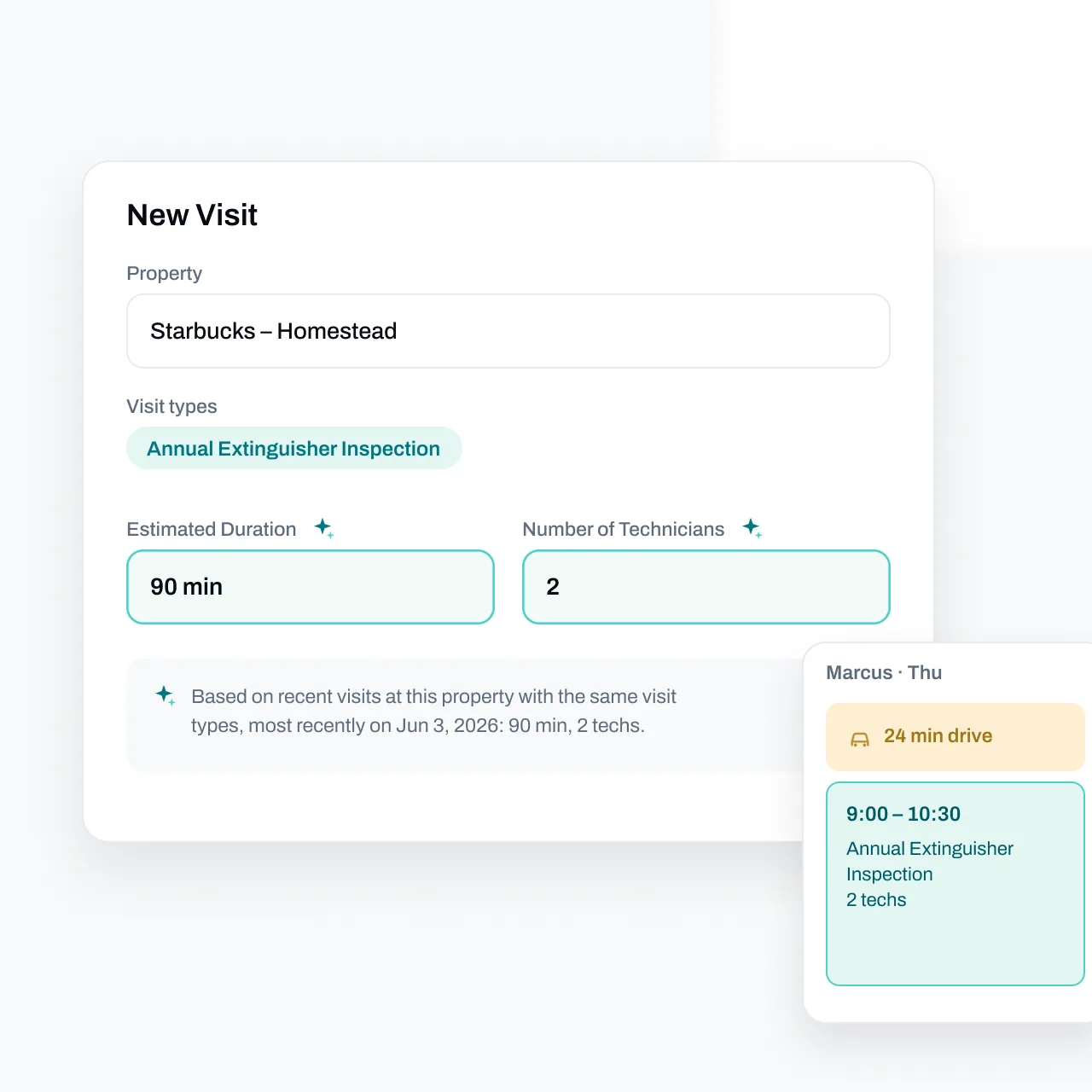
A two-tech crew clearing an annual in College Station punches the blue tag on the riser, finds one painted sprinkler head, and now a yellow tag goes up, a five-business-day notice clock starts, and the city expects the report in The Compliance Engine either way. Essential tracks it end to end: mobile sprinkler inspections that capture tag status and deficiencies in the field, automated scheduling for every punched interval, AHJ-ready reports, and a native Compliance Engine integration for cities that mandate it. Book a demo and see a yellow-tag day handled without a single retyped form.