
Kansas flips the usual licensing script. The Office of the State Fire Marshal states it plainly: the state doesn't license fire alarm or sprinkler companies, though registration with the office is required. Meanwhile extinguisher and fixed-system servicing firms face a strict certification program with ICC/NAFED exams and a hard November 30 renewal deadline. Knowing which side of that line your work falls on is the first Kansas compliance question.
Who regulates fire protection work in Kansas
The OSFM administers the Kansas Fire Prevention Code under K.S.A. Chapter 31 and K.A.R. Article 22-1, handling code adoption, plan review for certain occupancies, and inspections. Cities may adopt nationally recognized fire codes of their own, and any modifications they make go to the State Fire Marshal for review and approval (K.A.R. 22-1-1). Metro AHJs often run newer editions than the state baseline, so check what the city has adopted before writing deficiencies against an edition it doesn't use.
Certification, registration, and what Kansas skips
- Extinguisher and fixed-system firms: certified. Under K.S.A. 31-133a, firms that service, inspect, or install fire extinguishers or fixed extinguishing systems must be certified by the State Fire Marshal in one of four classes, RA through RD, each defining the work permitted. Certification rides on current ICC/NAFED examination credentials, liability insurance from $100,000 up to $1 million depending on class, and certificates that run one calendar year with renewals due by November 30 (OSFM fire extinguisher program, K.A.R. Article 22-10).
- Sprinkler, detection, and alarm firms: registered. No state license exists, but K.A.R. 22-1-6 requires any business that installs, maintains, modifies, or repairs fire sprinkler, fire detection, or fire alarm systems, outside one- and two-family dwellings, to file a notification of doing business with the State Fire Marshal within 30 days of commencing work (K.A.R. 22-1-6).
Cities can layer their own contractor licensing and permit rules on top of the state registration, so clearing the OSFM paperwork doesn't automatically clear you to pull permits everywhere. Ask the city before the bid, not after.
Adopted editions and the code footprint
K.A.R. 22-1-3 adopts the 2006 International Fire Code by reference along with a long NFPA list, including NFPA 10 (2007 edition), NFPA 13 (2007), NFPA 25 (2008), NFPA 72 (2007), NFPA 96 (2008), and NFPA 101 (2006); the OSFM's code listing matches. Those editions are older than what many Kansas cities enforce locally, which is exactly why the AHJ check matters more here than in most states.
Kansas also runs a filing that surprises out-of-state contractors: the code footprint. K.A.R. 22-1-7 requires a building and life safety compliance document, sealed by a Kansas-licensed design professional, for new construction, additions, renovations, and occupancy changes, with submittal to the State Fire Marshal for schools, larger assembly and institutional occupancies, and certain residential buildings. The required narrative covers the suppression system type, the fire alarm signaling system, and water supply for fire suppression, so your design data feeds directly into it.
Inspection frequencies
Because 22-1-3 adopts the maintenance standards directly, the NFPA calendars are the Kansas baseline:
- NFPA 25: quarterly through annual inspection and testing for water-based systems, five-year internal assessments.
- NFPA 72: annual testing for most fire alarm devices and appliances.
- NFPA 10: monthly quick checks, annual maintenance, six-year internal service, 12-year hydrostatic tests.
- NFPA 96: semiannual kitchen suppression service, hood cleaning by cooking volume.
Where a city enforces a newer edition, follow the stricter schedule and say so on the report.
Where reports go
Kansas has no statewide portal for contractor inspection reports. The owner keeps the records, and copies go to whichever authority inspects the property: the OSFM in its jurisdiction, the city fire prevention bureau elsewhere. For servicing firms, the paperwork that does have a state deadline is your own certificate: renewal applications must reach the OSFM by November 30, and a lapsed certificate turns every tag your techs hang into a problem.
Staying ahead of the November deadline
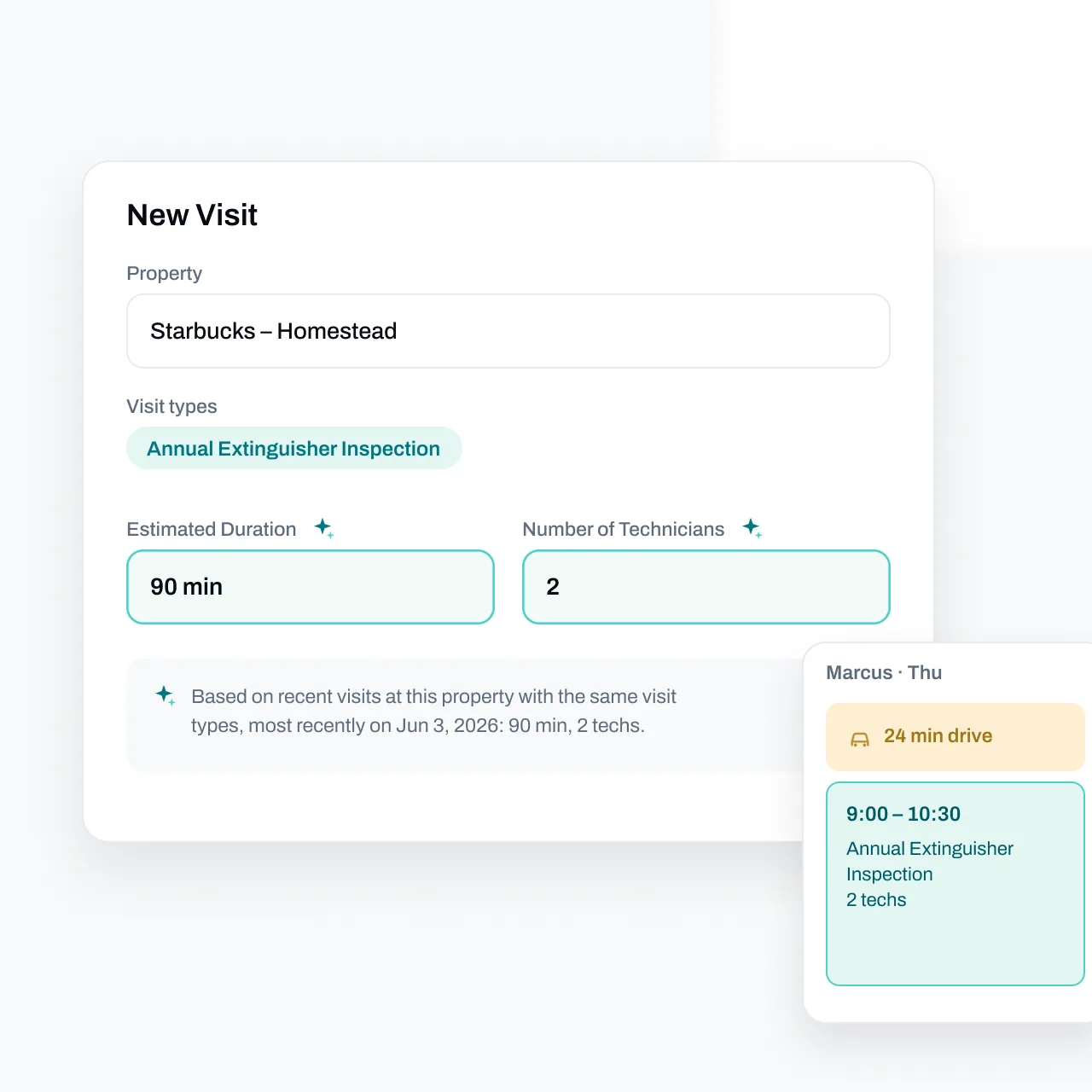
A Wichita extinguisher and suppression firm running 800 accounts hits the same wall every fall: renewal paperwork, techs' ICC/NAFED credentials to verify, and a quarter's worth of monthly checks and semiannual hood services landing at once. Essential takes the calendar off the whiteboard: recurring inspections scheduled by NFPA frequency, mobile checklists for extinguisher and fire alarm work, AHJ-ready reports the office can send the day the tech syncs, and integrations with your back-office tools. See it in a 30-minute demo before renewal season starts.