
Michigan asks for approval before the work, not just records after it. Under MCL 29.29, a firm may not install or modify a required fire alarm or fire suppression system until detailed plans and specifications go to the Bureau of Fire Services for approval, and when the job's done, documentation goes back on a bureau-provided form with a $40 fee. Miss that sequence and the paperwork problem becomes a legal one. Few states put a pre-approval step in the statute itself, and it shapes how every Michigan fire protection company runs its jobs.
Who regulates fire protection work in Michigan
The Bureau of Fire Services (BFS), home of the State Fire Marshal, sits inside the Department of Licensing and Regulatory Affairs (LARA) and administers the Fire Prevention Code, 1941 PA 207. BFS handles plan review, firm certification, and fire safety inspections in the facilities the state regulates, while trade licenses come from LARA's Bureau of Construction Codes. Cities and townships enforce their own fire prevention ordinances on top, so the local fire marshal is still the person who decides what an acceptable report looks like for a given building.
Licensing: two trade acts plus a BFS certification
Fire alarm work runs under the Electrical Administrative Act, 1956 PA 217. The individual credential is the fire alarm specialty technician license, which requires NICET Level II certification in fire alarm systems (or an equivalent LARA accepts). The company credential, the fire alarm contractor license, requires holding that technician license yourself or employing a full-time technician who is responsible for Michigan Electrical Code compliance on every installation. Lose your only licensed technician and you have 30 days to replace them and notify LARA.
Sprinkler contractors license as mechanical contractors with the fire suppression classification under the Forbes Mechanical Contractors Act, 1984 PA 192, through the Bureau of Construction Codes.
Then comes the layer contractors from other states don't expect: firm certification under MCL 29.26. Where the Fire Prevention Code applies, fire alarm and fire suppression system work must be performed by a BFS-certified firm, and MCL 29.29(5) extends that to testing, servicing, inspection, and maintenance unless bureau rules exempt the work. The exemptions live in administrative rules, so confirm with BFS which of your accounts fall inside the program before assuming a trade license alone covers you.
Portable extinguisher servicing isn't part of either trade act. Expectations for that work come from NFPA 10 and from the local fire marshal, so ask your AHJ what certification it wants to see before you quote extinguisher routes.
The paperwork Michigan actually names
MCL 29.29 spells out a full document trail. Plans and specifications go to BFS before installation or modification. Completion documentation goes on the bureau's form, certifying the system was installed to the manufacturer's specifications and tested under the supervision of a licensed architect, professional engineer, or a certified firm's employee, with the $40 fee attached. A drawing of the completed installation stays available to BFS or the local fire safety inspector for use during inspections. And ITM results get "noted and displayed at the location of the main control" and filed with the building owner or operator. Don't guess at form numbers; BFS supplies the current form, and the statute is the checklist for what it must say.
Inspection frequencies to build routes around
Michigan's cadence for routine ITM comes from the NFPA standards as the applicable codes and your AHJ apply them: quarterly and annual inspections with five-year internals for water-based systems under NFPA 25, annual testing for most alarm devices under NFPA 72, monthly checks plus annual maintenance for extinguishers under NFPA 10, and semiannual service for most kitchen systems with NFPA 96 cleaning intervals set by cooking volume. Because local ordinances vary and BFS rules carve their own scope, verify the enforced edition and cadence with the AHJ on every new account.
Where reports and records end up
Michigan's answer is written into the statute: the record of testing and servicing gets displayed at the system's main control location and filed with the owner or operator, per MCL 29.29(5), and installation documentation goes to BFS. There's no statewide third-party submission portal, and local fire departments each have their own intake habits, some by email, some by counter visit. A Grand Rapids company servicing a school's alarm system answers to BFS certification rules, the completion-form requirement, and the district's local fire inspector all on one job. Three audiences, one report.
Staying compliant when the state wants plans first
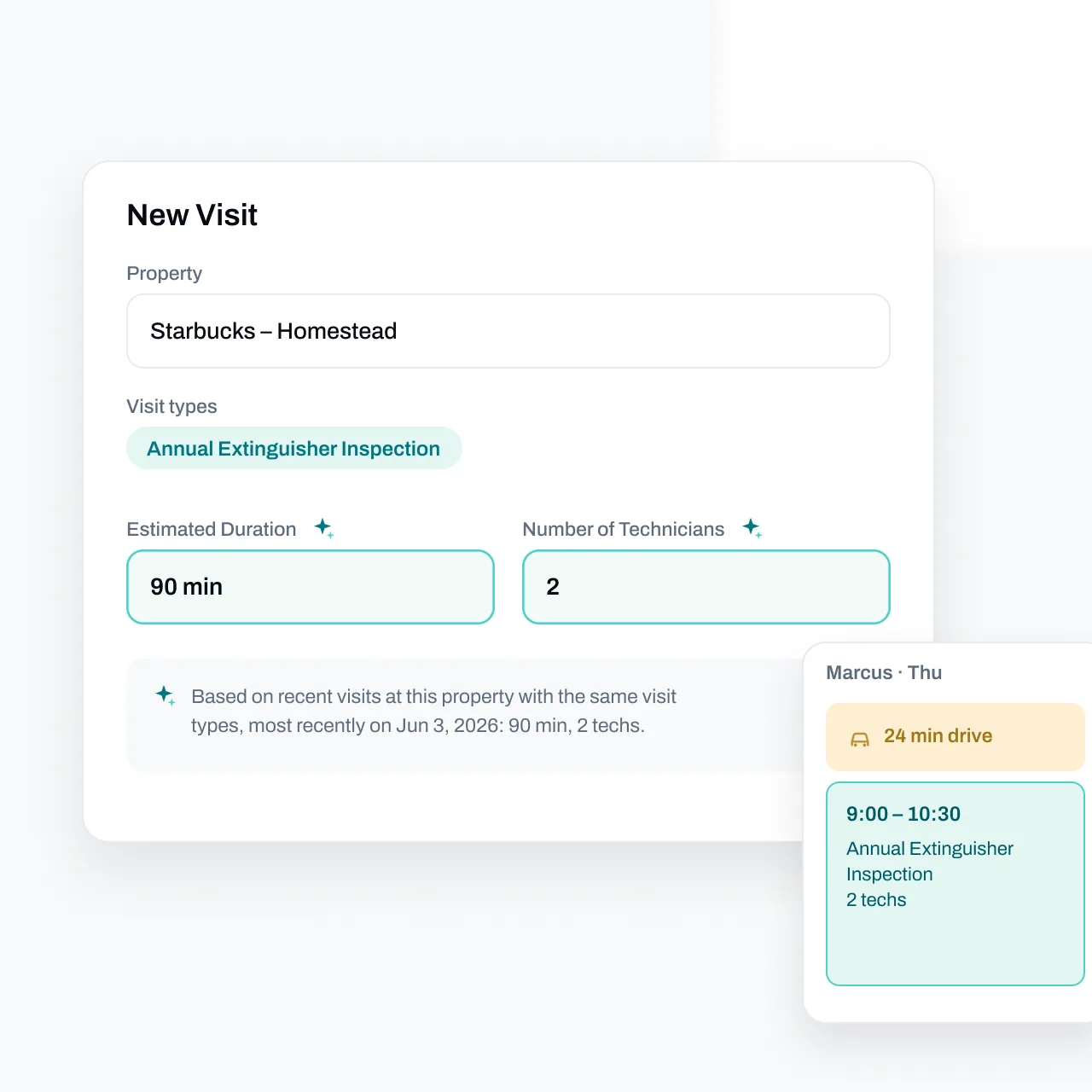
Michigan compliance is sequencing: plans approved before wrenches turn, certified firms on the right jobs, the bureau form filed, the record posted at the panel. Essential keeps the sequence intact without a wall of sticky notes. Jobs carry their documents with them, recurring inspections schedule themselves to each system's frequency, and techs finish fire alarm, sprinkler, and extinguisher inspections on mobile with a report ready for the owner, the panel file, and the inspector the moment they sync. Book a 30-minute demo and bring your messiest school account; that's the one it fixes first.