
Kentucky puts a clock on your paperwork. After your crew inspects a sprinkler, alarm, or suppression system, 815 KAR 10:060 requires a copy of the report to reach the State Fire Marshal within ten working days. Plenty of states let inspection records sit in a binder at the protected property until someone asks. Kentucky doesn't.
That filing rule shapes how inspection companies run their back office here, so it pays to get the whole picture straight: who licenses your techs, which forms count, and how often each system comes due.
Who regulates fire protection work in Kentucky
The State Fire Marshal heads the Division of Fire Prevention inside the Department of Housing, Buildings and Construction. The division writes and enforces the Kentucky Standards of Safety, reviews plans, and certifies the inspectors who test fire protection systems statewide.
The Standards of Safety adopt NFPA 1, Fire Code (2018 edition) and NFPA 101, Life Safety Code (2018 edition), together with the standards those codes reference in Chapter 2. That reference chain is what makes NFPA 25, NFPA 72, and NFPA 10 enforceable in Kentucky. Local fire departments still act as AHJs on their own turf, so a Louisville warehouse and a rural nursing home can see different enforcement priorities under the same code.
Licensing: who can work on and inspect systems
Sprinkler and suppression contractors
815 KAR 7:080 licenses fire protection sprinkler contractors, and the same regulation covers range hood suppression and chemical suppression contractors. Every licensed company needs a certificate of competency holder on staff. For sprinkler work, that person holds NICET Level III or higher in automatic sprinkler system layout; range hood contractors can qualify through manufacturer training. Proof of financial responsibility under KRS 198B.595 rounds out the application.
Sprinkler system inspectors
Inspecting water-based systems takes an individual certification from the division. The Initial Sprinkler Systems Inspector Certification Application asks for a Pearson VUE pass letter or current NICET Level II or higher in inspection and testing of water-based systems, plus at least 18 months of hands-on experience within the past five years. Inspectors who don't work for an active Kentucky sprinkler contractor must carry their own liability insurance with errors and omissions coverage.
Fire alarm inspectors
Alarm inspectors apply on Form FPS 33-01 and qualify through NICET Level II, III, or IV in fire alarm systems or a department-approved exam, with the same 18-month experience floor. Renewal runs annually on Form FPS 33-02 with six hours of continuing education.
Portable extinguishers sit outside this certification structure. The Standards of Safety let building owners or their agents inspect and test extinguishers and single-station smoke detectors themselves, and NFPA 10 governs the maintenance work. Ask the division before quoting anything unusual.
Required forms and reports
Kentucky skipped inventing its own report form. Under 815 KAR 10:060, Section 7, a required inspection or test "shall be recorded on the applicable form contained in NFPA 25 or NFPA 72 as determined by the State Fire Marshal." The standard NFPA forms are the filing.
The owner-performed exceptions work differently: extinguisher and single-station smoke detector records stay in the building, available whenever the fire marshal wants a look. Everything a certified inspector touches gets reported to the owner and forwarded to the state.
Inspection frequencies
- Annually: fire detection and alarm systems and all fire suppression systems in most buildings must be inspected and tested for proper operation once a year.
- Quarterly: in state-licensed hospitals, nursing homes, and ambulatory surgical centers, those same systems get inspected and tested every quarter by a Kentucky certified inspector.
- Owner checks: monthly visual checks on portable extinguishers, monthly tests of electric smoke alarms, weekly tests of battery-powered units.
NFPA 25 and NFPA 72 layer their own internal schedules on top, from quarterly flow switch tests to five-year internal pipe exams. Build recurring schedules from both layers and confirm edge cases with your AHJ.
Where reports go
Report to the owner first, then forward a copy to the State Fire Marshal within ten working days of the inspection. That's the sequence in Section 7 of the Standards of Safety. Kentucky hasn't handed collection to a third-party portal, so the obligation lands on whoever ran the inspection while the tech is already three jobs down the road.
One quarterly hospital contract shows the stakes. Four visits a year across alarm and sprinkler systems, each producing NFPA forms, each starting a ten-day filing window. Multiply by every healthcare account on your books and deadline tracking becomes its own job.
Keeping Kentucky accounts compliant
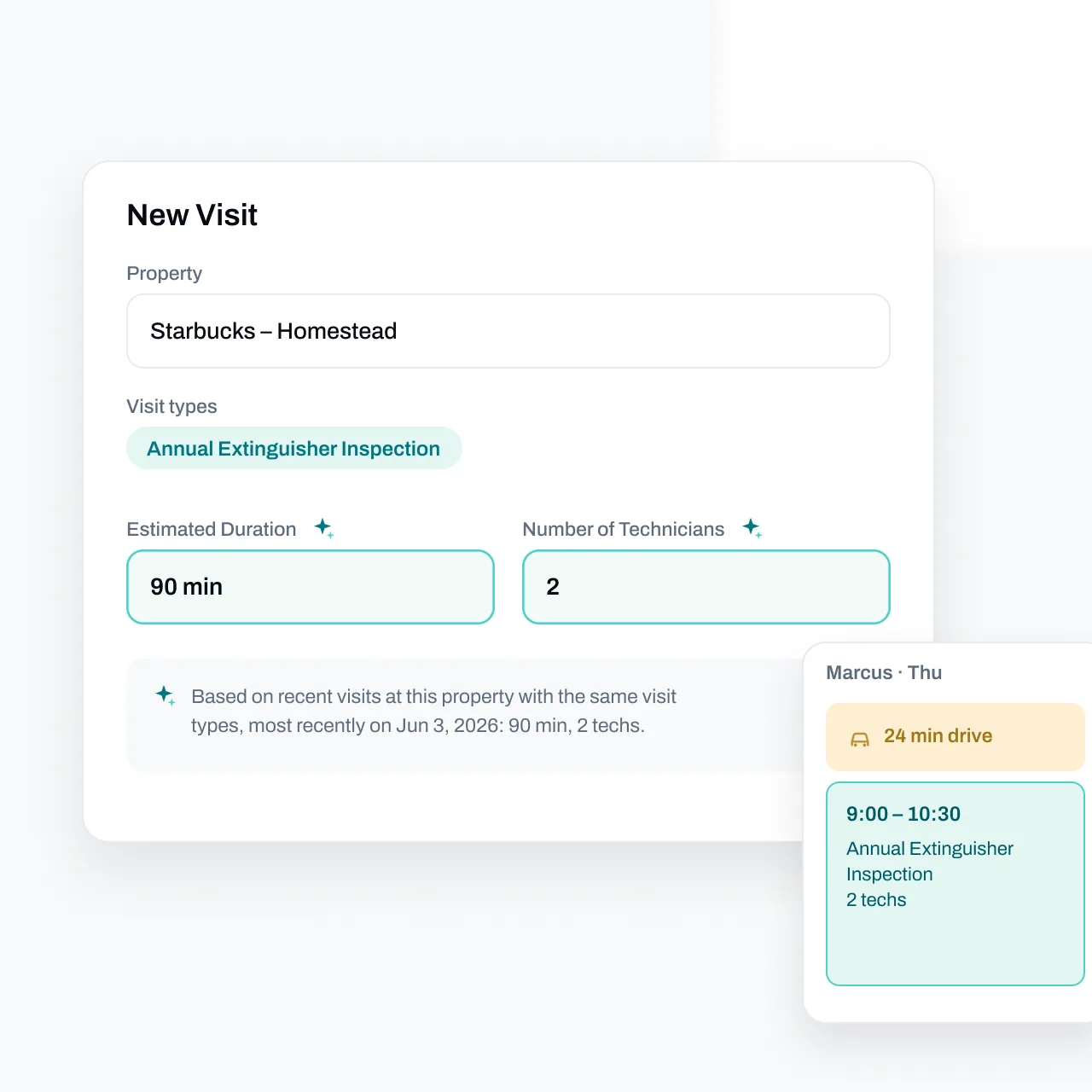
Essential handles that workflow end to end: recurring schedules that surface every annual and quarterly due date, mobile inspections your techs complete on NFPA-aligned forms in the field, and finished reports ready for the owner and the fire marshal the moment the visit wraps. Teams running fire sprinkler inspections, fire alarm inspections, and kitchen suppression work keep every Kentucky account inside the ten-day window without a spreadsheet in sight. Book a demo and bring your messiest quarterly account.