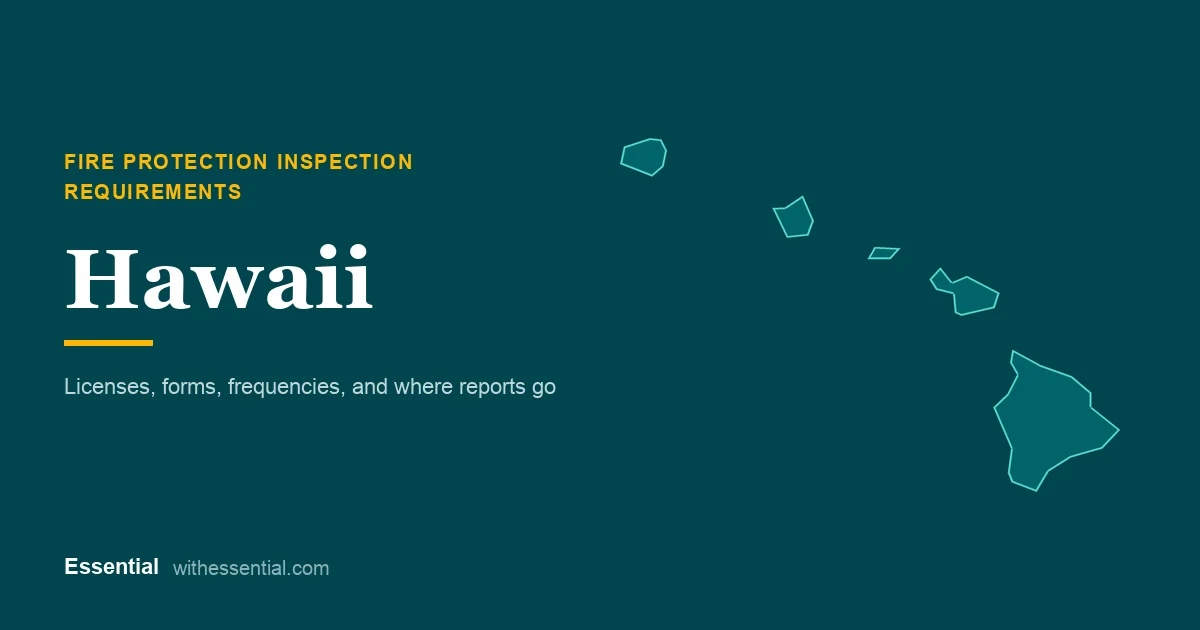

In Hawaii, your AHJ depends on which island the building sits on. There's no statewide fire marshal's office running inspections; the four county fire departments, Honolulu, Hawaii, Maui, and Kauai, enforce the fire code, each with its own amendments and its own fire prevention bureau. A contractor with accounts on Oahu and Maui is working under two versions of the code and answering to two different offices.
Who regulates fire protection work in Hawaii
The State Fire Council, made up of the four county fire chiefs, adopts the Hawaii State Fire Code under HRS Chapter 132. The current state code is built on NFPA 1 with Hawaii amendments; the 2018-edition version took effect January 19, 2021. Counties then adopt the code with their own changes, and they don't all move at once. The City and County of Honolulu has already moved forward, with its county fire code based on NFPA 1, 2021 edition. Check which edition and which amendments your county is on before you cite a section number to a building owner.
Contractor licenses: C-20, C-20a, and C-15a
Trade licensing runs through the Contractors License Board at the Department of Commerce and Consumer Affairs, not the fire service. HAR Title 16, Chapter 77 defines the specialty classifications that matter here:
- C-20 Fire protection contractor: lays out and installs fire prevention and protective systems, including the mechanical apparatus, piping, and equipment that go with them
- C-20a Fire repressant systems contractor: installs tanks, piping, sprinkler heads, dry chemical systems, and CO2 systems (yes, "repressant" is the state's own spelling)
- C-15a Fire and burglar alarm contractor: installs, maintains, and repairs central fire and burglar alarm systems, though the classification excludes installing conduit
That conduit exclusion trips up alarm companies regularly: raceway work belongs to the electrical trade, so plan your subs accordingly. On top of the CLB license, the county fire code requires permits from the fire department for regulated work; Honolulu's code has contractors obtain permits through the Fire Prevention Bureau, which also runs acceptance tests on new fire alarm installations.
Forms, permits, and acceptance tests
Hawaii has no statewide inspection report form and no statewide electronic filing system. The paperwork that matters is county paperwork: permit applications before installation or modification work, acceptance test scheduling with the county fire prevention bureau, and ITM records kept per the NFPA standards the fire code references. An Oahu alarm contractor finishing a tenant-improvement job books the acceptance test with HFD, pays the test fee set in the county fire code, and hands the owner the inspection and testing documentation NFPA 72 calls for. On a neighbor island, the same job follows that county's process, which may differ in fee, form, and lead time. When you're unsure what a county wants, ask its fire prevention bureau before the truck rolls.
Inspection frequencies
Because the state fire code is NFPA 1 at its core, inspection, testing, and maintenance cycles come from the standards NFPA 1 references: NFPA 25 schedules for sprinkler and standpipe systems, annual NFPA 72 testing for alarm systems, monthly checks and annual maintenance for extinguishers under NFPA 10, and NFPA 96 service intervals for kitchen exhaust and suppression. Resorts and restaurants dominate many Hawaii service books, which makes the kitchen suppression and extinguisher cycles the busiest part of the calendar, and hotel fire alarm systems among the largest single inspections a crew will run all year.
Where reports go
Routine ITM reports stay with the building owner, and the county fire department reviews them during its own inspections or when it asks. Nothing in the state code sets up a third-party submission portal, so treat each county's fire prevention bureau as the destination and confirm whether it wants copies delivered, retained on site, or attached to permit closeouts. Document deficiencies in writing and keep the owner's sign-off; with four counties and rotating fire inspectors, your records are the continuity.
Running a compliant book of business across islands
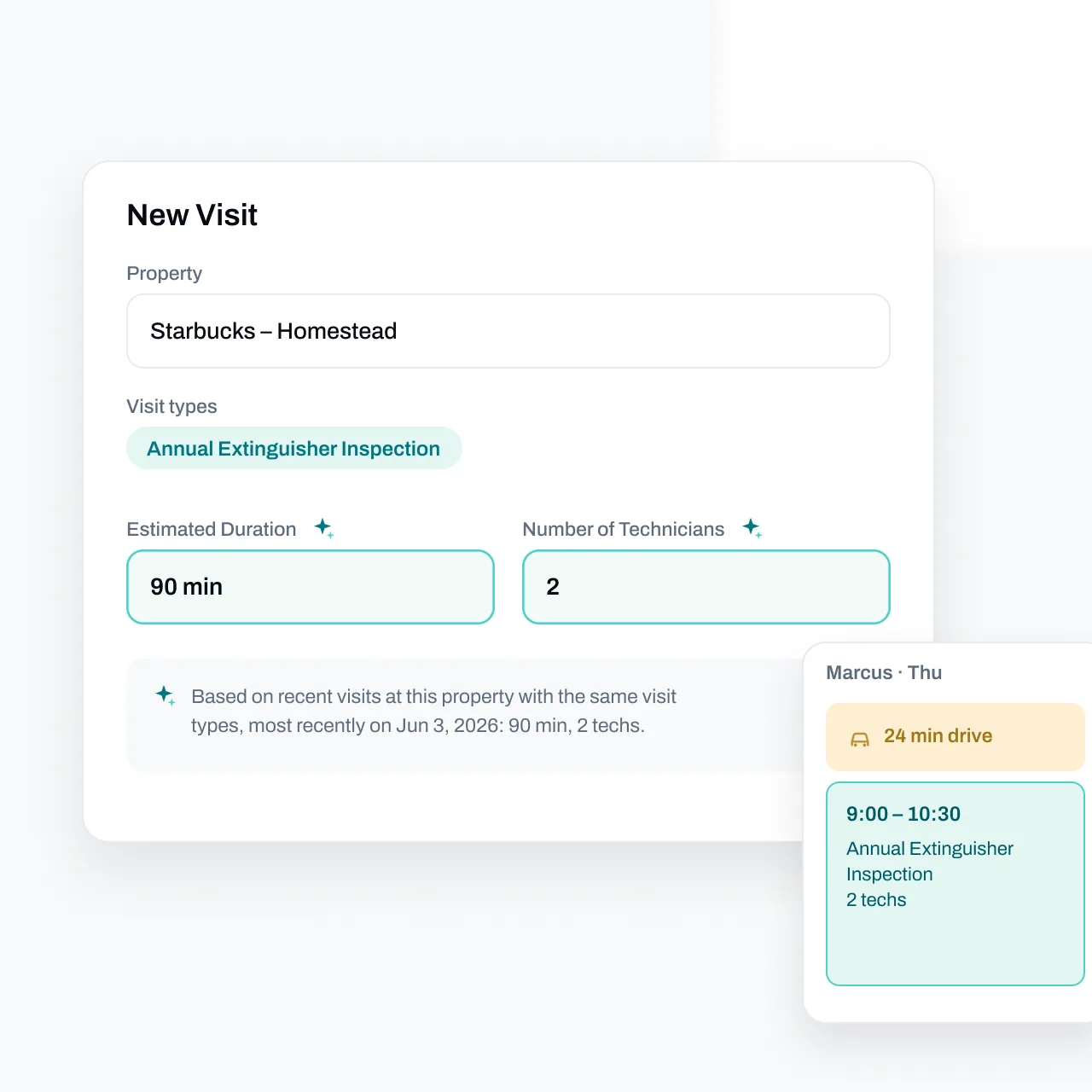
Two county code editions, permit workflows that differ by island, and NFPA cycles across hotels, restaurants, and high-rises: the operational load in Hawaii is coordination, not code knowledge. Essential gives your team automated scheduling for every recurring cycle, mobile fire alarm inspections with NFPA 72-based forms, and kitchen suppression reports that come out AHJ-ready for whichever county you're working in. Owners get their documentation the same day, and your office stops rebuilding reports at 9 p.m. See it in a 30-minute demo.