
California splits fire protection work across two licensing agencies and hundreds of enforcing fire departments. The Contractors State License Board licenses the companies that install and service systems, the State Fire Marshal licenses extinguisher and fixed-system servicing, and your local fire chief enforces all of it, sometimes with an electronic submission mandate attached. On top of that, the code base just turned over: the 2025 edition of the California Building Standards Code, including the Part 9 California Fire Code, took effect January 1, 2026.
Who regulates fire protection work in California
The State Fire Marshal writes the service rules. Under Health and Safety Code 13195, the SFM sets minimum frequencies of service, inspection, and testing for automatic fire extinguishing systems, and HSC 13195.5 requires every system to be serviced, tested, and maintained to those regulations, which live in Title 19 of the California Code of Regulations. Enforcement is local: HSC 13146 puts the SFM's building standards and regulations in the hands of city and county fire departments within their jurisdictions.
Licensing: match the license to the system, not the trade name
Sprinkler and other fire protection system work belongs to the CSLB C-16 Fire Protection Contractor classification, which covers laying out, fabricating, and installing all types of fire protection systems, excluding electrical alarm systems. State law backs that up: Business and Professions Code 7026.12 restricts fire protection system installation to a fire protection classification holder.
Fire alarm installation is electrical work. CSLB's guidance for building officials states that fire alarm work requires a C-10 Electrical license. A common trip-up: the BSIS Alarm Company Operator license many security firms hold doesn't reach fire, because the Alarm Company Act's definition of an alarm system expressly excludes fire protection systems.
Extinguisher and fixed-system servicing runs through the State Fire Marshal. HSC 13163 makes it unlawful to service, charge, or test portable extinguishers for a fee without an SFM license, and the OSFM's Fire Extinguisher Program issues concern licenses to companies and Certificates of Registration to the technicians who pass the written exam. For automatic extinguishing systems, Title 19, section 905 requires either an OSFM "A" license or a CSLB C-16 to service the system, and the A license comes in three types: Type 1 for water-based fire protection systems, Type 2 for engineered and pre-engineered fixed extinguishing systems, and Type L for public or private entities that only test and maintain wet pipe systems on their own property. The full licensing text, insurance requirement included, is in the AES laws and regulations compilation on the OSFM's AES program page. Match the license type to your service mix before bidding.
Required reports, forms, and tags
Water-based systems follow Title 19, Chapter 5, which incorporates NFPA 25 (2011 edition) with state amendments as the California Edition, and service results go on the State Fire Marshal's numbered AES report forms. Table 906.4(a) of the OSFM's AES laws and regulations compilation names each one: AES 1 is the ITM cover sheet attached to AES forms 2 through 8 as applicable, AES 2.1 through 2.9 cover wet, dry, pre-action, and deluge sprinkler work on quarterly/annual and five-year cycles, AES 3 and 4 handle standpipes and private fire service mains, AES 5.1 through 5.4 run fire pumps from the weekly diesel test to the annual, AES 6 covers water storage tanks, and AES 9 and 10 carry deficiency lists and corrective action. A critical deficiency sends the applicable form to the fire code official. San Diego Fire-Rescue's testing requirements, for example, key their sprinkler and standpipe entries to a CSFM AES form.
Use our California AES forms guide to choose the report for each system and inspection interval, compare AES 2.1 with AES 2.2, and open official form PDFs.
Extinguisher work leaves a paper trail on the cylinder itself. Sacramento Metro Fire spells out the field reality: a state-certified technician services each extinguisher, and the service tag must stay on the unit for the fire inspector to see. Huntington Beach adds that inspection reports should be retained on site for fire inspector review even where no upload is required.
Inspection frequencies
The SFM's Title 19 regulations set the floor, and local pages show how it cashes out. San Diego requires annual service tests and 5-year inspections by a licensed C-16 contractor for sprinkler and standpipe systems, plus annual fire alarm testing per NFPA 72 as amended by the state. Portable extinguishers get serviced annually and after each use. Kitchen hood suppression runs on a semi-annual servicing cycle. Frequencies for less common systems vary by system type under Title 19, so build your recurring schedule from the regulation and the AHJ's program, not from memory.
Where the reports go: check every city, every year
California is heavy Compliance Engine territory, but membership changes. San Diego has required all compliant and non-compliant test reports through The Compliance Engine since April 2020. West Covina followed in August 2021, and Cosumnes Fire requires it for Elk Grove and Galt. Then there's the reverse case: Huntington Beach dropped its TCE requirement in February 2025. A shop that kept uploading there wasted admin hours; one that assumed San Diego worked like Huntington Beach missed mandatory filings. Same state, opposite answers, eighteen months apart. Keep a per-AHJ submission list and reverify it annually.
Compliance across hundreds of fire departments
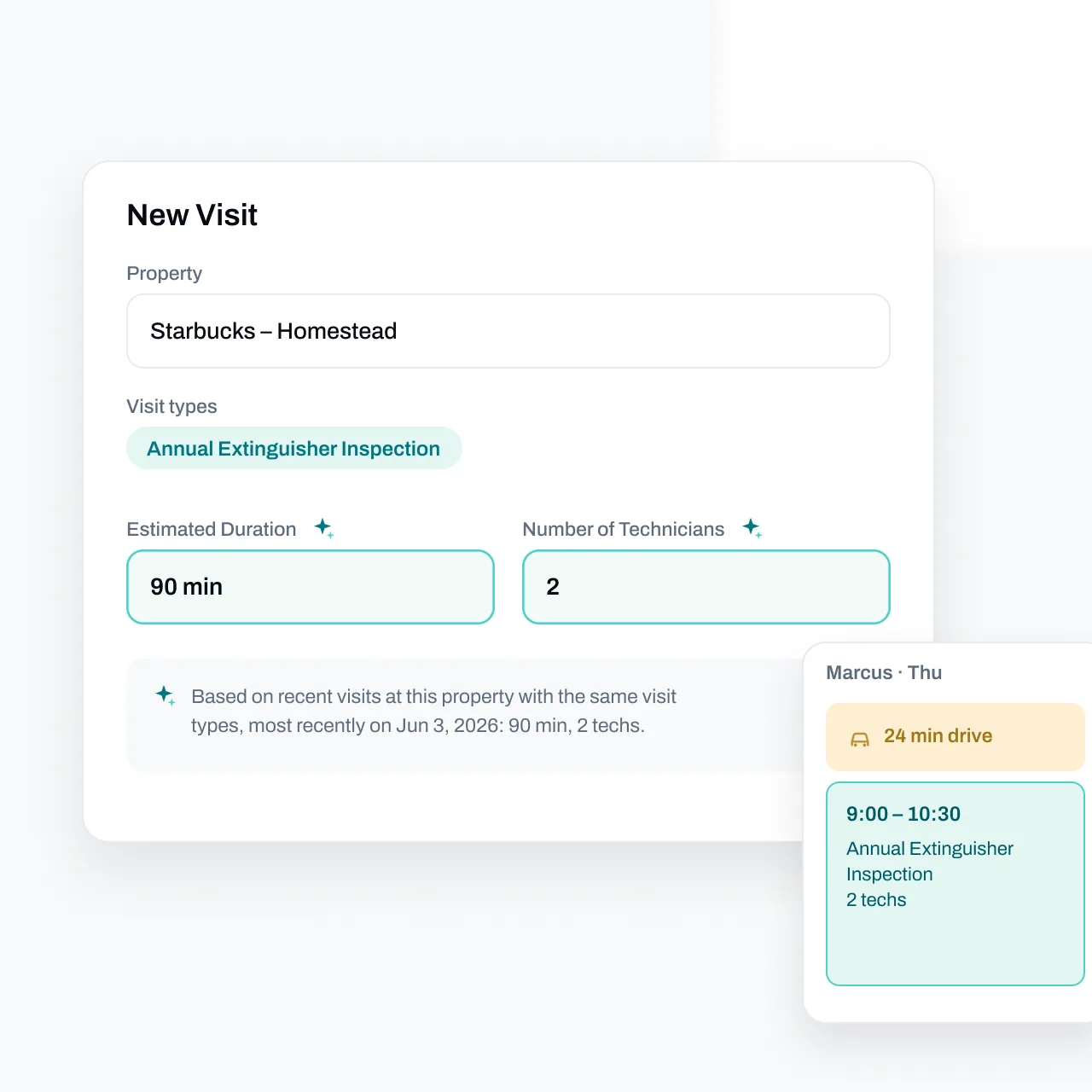
The work in California isn't just passing the inspection; it's proving it to the right agency in the right format, city by city. Essential keeps the machinery straight: automated scheduling for annual, 5-year, and semi-annual cycles, mobile inspections that produce AHJ-ready reports on current forms, and a built-in Compliance Engine integration for jurisdictions like San Diego and West Covina that mandate it. Get a 30-minute demo and see how a C-16 shop runs five-year inspections without a filing slipping.