
Florida runs on a single statewide fire code. The Florida Fire Prevention Code, now in its 8th edition (effective December 31, 2023), is built on Florida-amended 2021 editions of NFPA 1 and NFPA 101, and every local fire official in the state enforces it as the minimum code. Your ITM obligations look the same in Miami as in Pensacola. What changes by jurisdiction is how the report gets to the fire official, and that part just moved.
Rule 69A-46.041, F.A.C., amended effective March 24, 2026, spells out how water-based inspection results reach the AHJ: a uniform summary form, color-coded valve tags, and delivery by mail, hand delivery, electronic submission, or a third-party vendor. If your techs treat the owner's copy as the finish line, Florida disagrees.
Who regulates fire protection work in Florida
Florida's Chief Financial Officer is designated the State Fire Marshal, and the Division of State Fire Marshal sits inside the Department of Financial Services. Its Bureau of Fire Prevention handles code development and licenses the fire protection industry. Enforcement is local: under FS 633.208, every municipality, county, and special fire district enforces the Florida Fire Prevention Code as its minimum firesafety code, using certified firesafety inspectors.
Licensing: who can touch which system
FS 633.102(3) splits fire protection system work into five contractor classes, certified by the Division under FS 633.318:
- Contractor I covers all fire protection systems except pre-engineered systems.
- Contractor II is limited to water-based systems: sprinklers, water spray, foam-water, and standpipes.
- Contractor III handles CO2, foam, dry chemical, and other chemical systems (again excluding pre-engineered).
- Contractor IV covers dwelling sprinklers for one- and two-family homes and mobile homes.
- Contractor V is underground piping for water-based systems.
Two more credentials matter for service companies. Technicians who inspect water-based systems for a Contractor I or II must hold a water-based inspector permit from the Division, which requires NICET Level II or equivalent in inspection and testing. Extinguisher and pre-engineered system work runs through the fire equipment dealer license, Classes A through D, with each class scoped by what you may service, recharge, and hydrotest.
Fire alarms sit with a different agency. The Electrical Contractors' Licensing Board at DBPR licenses alarm system contractors under FS 489.505; an Alarm System Contractor I may work on all alarm types including fire, while Contractor II excludes fire. The State Fire Marshal keeps a hand in anyway: FS 633.346 lets it order corrective action on installed alarm work.
Required forms, tags, and reports
Start with FS 633.308: it's unlawful to service, test, repair, inspect, install, hydrotest, or recharge an extinguisher or pre-engineered system without attaching a standard service tag, and fire protection systems get standard inspection tags. The owner gets a copy of the report at the time of inspection, and violations must be forwarded to the AHJ within 30 days. Tag specifications for extinguisher work live in Chapter 69A-21, F.A.C.
For water-based systems, Rule 69A-46.041 adds three specifics: the NFPA 25 report goes to the owner at completion of each inspection, the Uniform Summary ITM Report (Form DFS-K3-2015) goes to the local AHJ, and the main water control valve gets a record tag colored green for a compliant system, yellow for noncritical deficiencies, or red for critical deficiencies and impairments. The colors carry deadlines: a red tag means the owner hears about it within 24 hours of the inspection, critical deficiencies left uncorrected for 30 days go to the AHJ, yellow-tag deficiencies get 90 days, and an impairment that isn't corrected within 72 hours must reach the AHJ within 72 hours of the inspection. The same rule makes contractors keep inspection reports for at least 10 years. A crew closing out an annual at a Pinellas Park strip mall hangs the green tag on the main control valve, hands the owner the NFPA 25 report, and still owes the summary form to the fire department. Miss that last step and the deficiency record the AHJ expects never arrives.
Inspection frequencies under Florida law
FS 633.312 requires water-based systems to be inspected under NFPA 24 and NFPA 25 procedures, with quarterly, annual, 3-year, and 5-year inspections consistent with the owner's contract, and hydrants flowed at least once a year. Portable extinguishers get annual maintenance under NFPA 10 plus six-year teardown procedures per Rule 69A-21.237. Fire alarm ITM follows FS 633.348 and the NFPA 72 edition adopted in the code.
The editions come from Rule 69A-60.005 and 69A-3.012: NFPA 25 (2020), NFPA 72 (2019), NFPA 13 (2019), and NFPA 10 (2018). A 9th edition of the FFPC is in rulemaking as of mid-2026, so check the State Fire Marshal's code page before you bid multi-year contracts on current editions.
Where the reports actually go
Florida law names two recipients: the building owner and the local AHJ. The 2026 rule explicitly allows electronic and third-party submission, and some Florida jurisdictions have standardized on one vendor. Pinellas Park, for example, requires providers who inspect, service, or test fire protection systems in its jurisdiction to register and submit reports through The Compliance Engine. Other cities take the form by email or portal. Before your first job in a new jurisdiction, ask the fire prevention office which channel it wants; the statute sets the obligation, but the AHJ picks the pipe.
Keeping five-class licensing and one deadline calendar straight
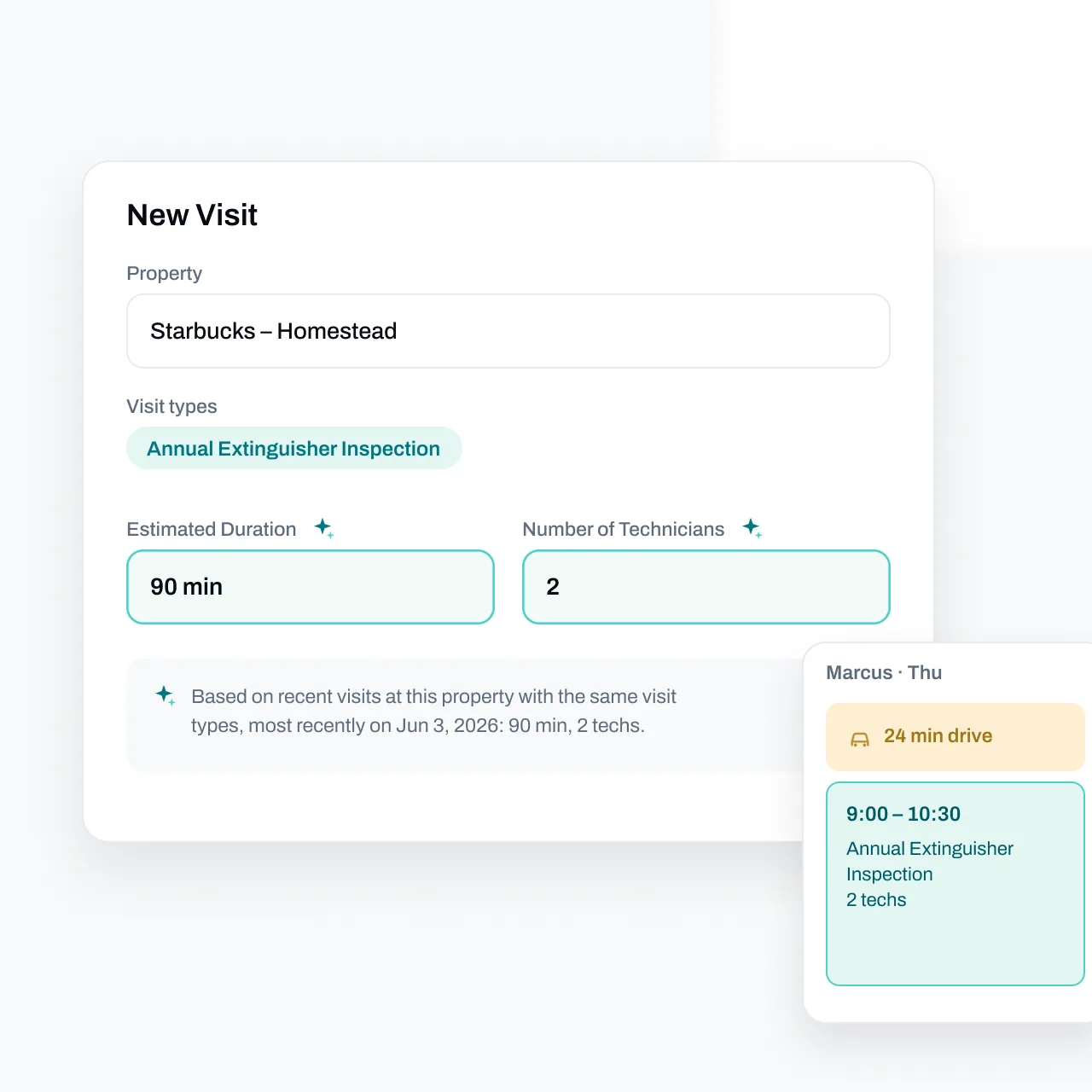
A Florida shop running extinguisher routes under a Class A dealer license, sprinkler annuals under a Contractor II certificate, and alarm tests under an EF license is juggling three license renewals, four inspection frequencies, and an AHJ submission rule that changed this spring. Essential keeps that on one calendar: automated scheduling by frequency, mobile inspections that produce AHJ-ready NFPA 25 and NFPA 72 reports, and a direct Compliance Engine integration for jurisdictions like Pinellas Park that require it. Book a 30-minute demo and bring your messiest quarterly backlog.