
Alabama wrote NICET into state law. To hold a fire protection sprinkler contractor permit, your designated certificate holder must have passed the NICET Fire Protection Layout Technician Level III exam, and the fire alarm permit carries a matching NICET Level III requirement on the alarm side. Both permits come from the State Fire Marshal, an office that sits inside the Alabama Department of Insurance rather than a standalone public safety agency.
Who regulates fire protection work in Alabama
The Alabama State Fire Marshal administers contractor permitting statewide and adopts the state's fire code by regulation. Municipal fire departments and building officials handle local enforcement, and state law preserves their authority: Section 34-33-9 says the sprinkler chapter imposes no limits on a municipality's power to regulate contractors, and Section 34-33-8 requires permit holders to present the State Fire Marshal's permit to the local building official, who collects local license fees before work proceeds. Plan on satisfying both layers.
Adopted code: the 2021 IFC since January 2023
By regulation effective January 1, 2023, the State Fire Marshal adopted the 2021 International Fire Code with Appendices B, C, D, E, and M. The office may also consult the 2021 ICC and NFPA documents to determine how the adopted code applies. Cities can layer amendments on top, so verify the enforced edition with the local fire official on out-of-town work.
State Fire Marshal permits by trade
Fire sprinkler contractors
Alabama Code Title 34, Chapter 33 makes it unlawful to engage in the business of installing, repairing, altering, adding to, maintaining, or inspecting fire protection sprinkler systems without conforming to the chapter. The scope matters for ITM shops: inspection is in the statute, not just installation. The application to the State Fire Marshal runs $200 under Section 34-33-4 and names the certificate holder, the individual with the NICET Layout Level III credential who is actively in charge of the work. There's a carve-out for building owners with in-house fire protection engineers and skilled staff maintaining their own systems, and a separate residential Contractor II permit path with NFPA 13D training requirements for one- and two-family dwelling work.
Fire alarm contractors
The parallel fire alarm law, Alabama Code Chapter 34-33A, requires a State Fire Marshal's permit with a $100 application fee and a certificate holder who passed the NICET Fire Alarm Systems Technician Level III exam or higher. Firms that also install burglar alarm, CCTV, or locksmith work fall under the Alabama Electronic Security Board of Licensure on that side of the business, so many low-voltage shops hold credentials from both bodies.
Portable extinguishers and kitchen systems
Alabama has no statewide permit program for portable extinguisher servicing comparable to its sprinkler and alarm permits. Requirements flow from NFPA 10 and NFPA 96 as referenced through the adopted fire code, and some municipalities add their own layer, like the City of Gulf Shores, whose fire protection systems permit application asks for certification types covering portable extinguishers and pre-engineered kitchen suppression. Confirm with each city's fire prevention office before assuming extinguisher work is unregulated there.
Required forms and reports
Alabama doesn't prescribe a statewide ITM report form, and no statewide electronic submittal mandate was verifiable at the time of writing. In practice, reports and tags follow the documentation requirements of the NFPA standard being applied, stay with the building owner, and get produced for the fire official on request. Where a local department wants reports delivered to it directly, it will say so; ask each AHJ rather than assuming the Birmingham playbook works in Mobile.
Inspection frequencies
With the 2021 IFC as the state baseline, ITM cadences track the referenced standards:
- Sprinkler systems: quarterly and annual inspections and tests, five-year internal assessments, per NFPA 25
- Fire alarm systems: annual functional testing with more frequent visual checks for certain components, per NFPA 72
- Portable extinguishers: monthly visuals and annual maintenance, plus six-year and hydrostatic intervals, per NFPA 10
- Kitchen exhaust and suppression: semiannual servicing under NFPA 96, with cleaning frequency driven by cooking volume
Staying compliant in Alabama
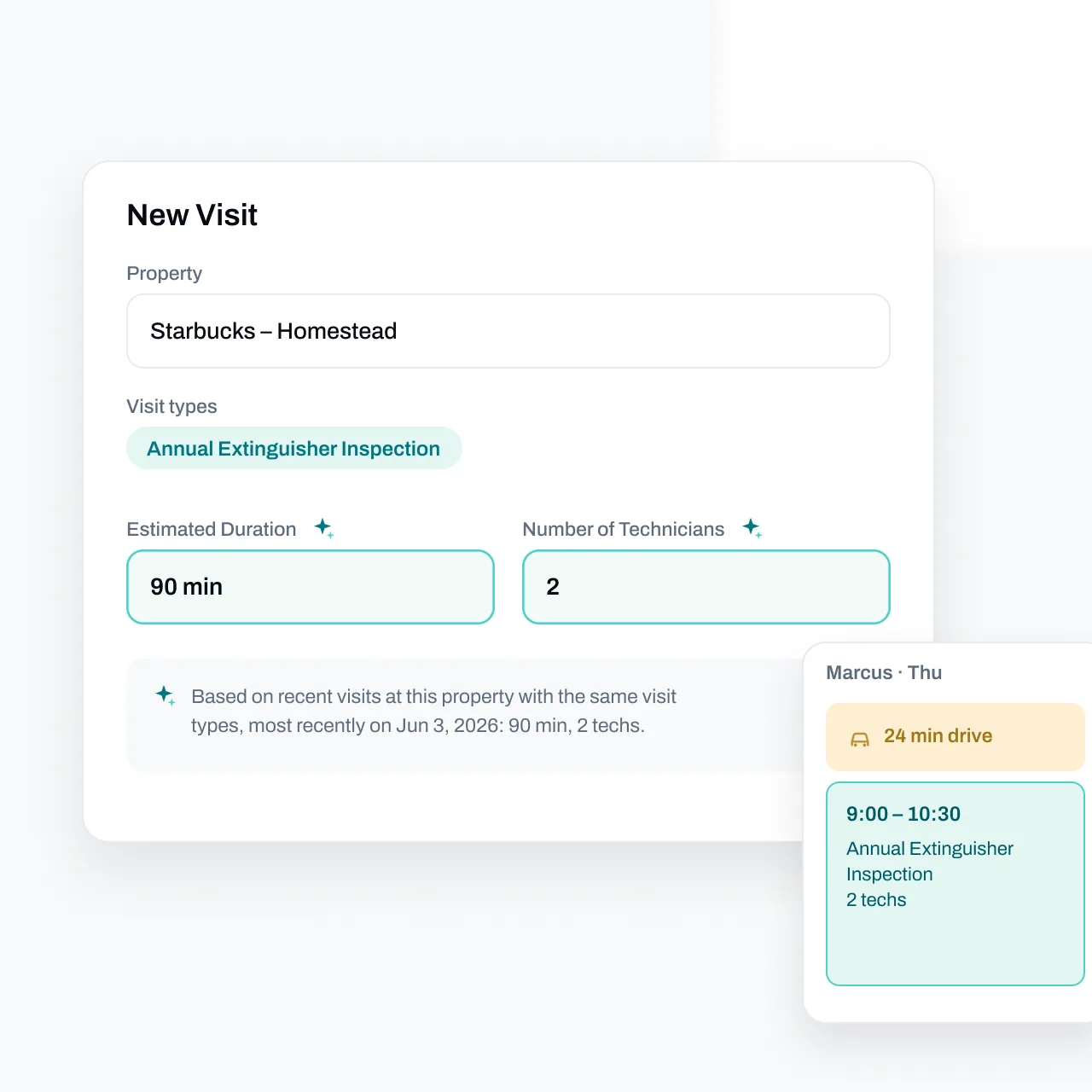
Alabama's structure rewards contractors who keep credentials and cadences tight: one NICET-anchored permit per trade, a statewide code baseline, and local building officials who check your paperwork before issuing anything. Essential handles the operational half of that. Automated scheduling keeps every account on its NFPA 25 or NFPA 72 cycle, techs run sprinkler and fire alarm inspections from their phones, and the report a local fire official wants to see is generated when the tech hits complete, not rebuilt in the office a week later. When an inspector asks for last year's dry-system test, it's a search, not an archaeology project. Book a 30-minute demo.