
Monthly quick checks and annual maintenance get all the attention, but the intervals that quietly generate the most missed work in a fire extinguisher business are the long ones: the 6-year internal examination and the hydrostatic test. They're years apart, they vary by cylinder type, and they're exactly the kind of date a spreadsheet loses.
The hydrostatic intervals, by type
NFPA 10 sets the hydrostatic test schedule by extinguisher type:
- Every 5 years: pressurized water and foam, wet chemical, and CO2 cylinders, plus dry chemical units with stainless steel shells.
- Every 12 years: dry chemical units with mild steel, brazed brass, or aluminum shells, and Class D units.
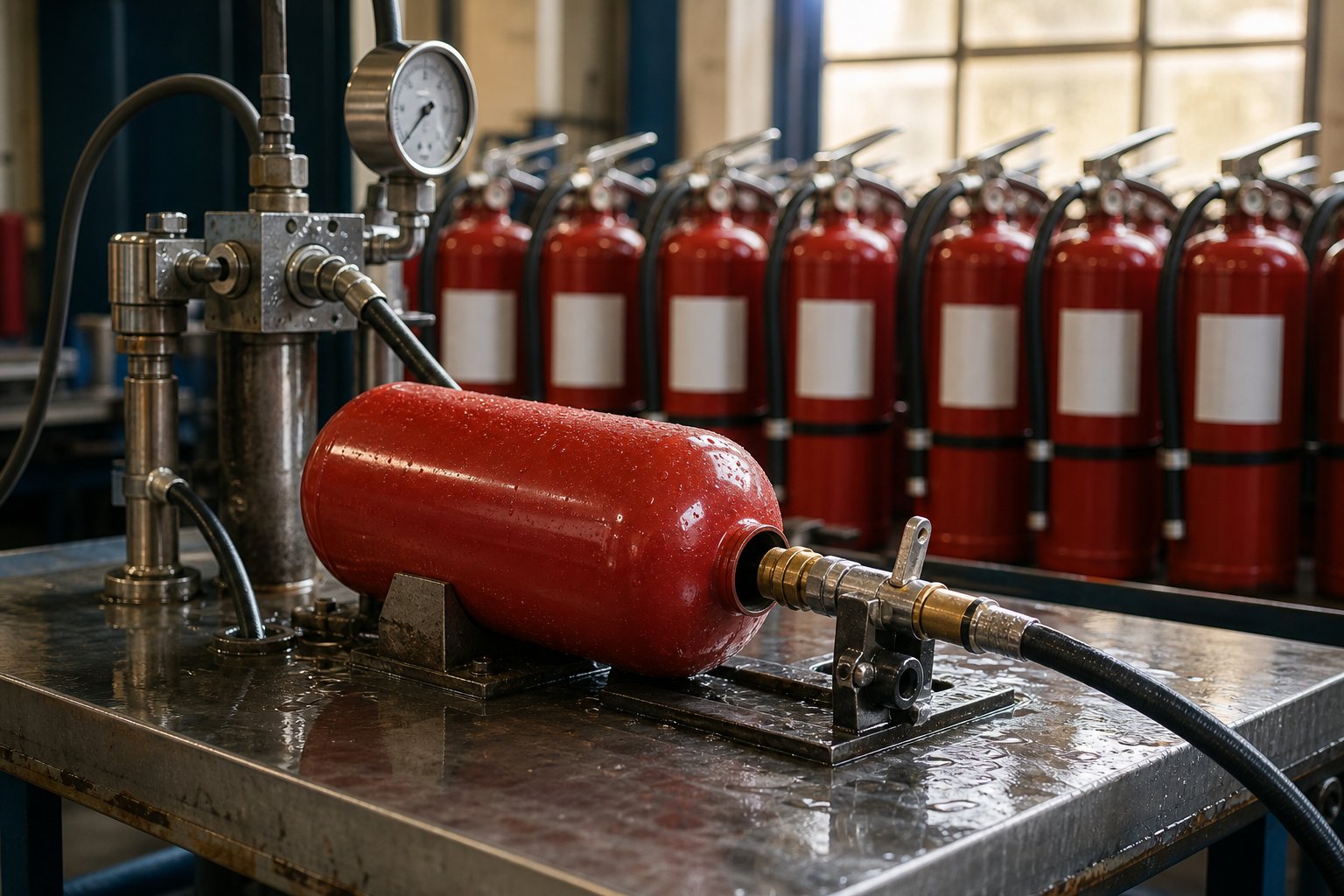
The test itself is what it sounds like: the cylinder is emptied and pressure-tested to confirm the shell can still hold what the gauge says it holds. A cylinder that fails gets condemned, not repaired.
The 6-year exam nobody budgets for
Stored-pressure extinguishers on the 12-year hydrostatic cycle carry an extra obligation: every 6 years they must be emptied and given an internal examination by a trained technician. That's the interval that catches shops off guard, because it doesn't line up with anything else. It isn't the annual. It isn't the hydro. It's its own clock, ticking per cylinder, based on the date stamped on the last verification-of-service collar.
Miss it and the unit is out of compliance even though it passed its last twelve monthly checks and its last annual.
A real example: the 2014 batch
A shop takes over a manufacturing account from a competitor. Two hundred dry chemical units, all tagged, all current on annuals. Then a tech reads the cylinder dates: a batch stamped 2014 means the 12-year hydrostatic came due in 2026, and the 6-year internal exam from 2020 has no record anywhere. The previous vendor either did the work and lost the paperwork or never did it. Either way, the new shop now owns the conversation with the customer, and the quote for bringing two hundred cylinders current.
That conversation goes very differently when you can hand the owner a unit-by-unit list with each cylinder's manufacture date, last hydro, and next due date, instead of a shrug and an estimate.
Tracking is the business model
The useful way to see 5-, 6-, and 12-year intervals: they're recurring revenue with the invoice dates already written, if you can see them coming. A shop that tracks every cylinder by serial number knows exactly how many hydros and internal exams come due next quarter, quotes them before the customer asks, and schedules them with the annuals to save the trip. A shop that doesn't finds out a cylinder was due when a fire marshal reads the collar.
Essential keeps each extinguisher as its own asset with its own service history, so the 6-year and hydro dates surface on schedule instead of by surprise, and the tech's mobile app captures the collar and tag data on site. The rest of the NFPA 10 program is covered in our contractor's reference and the inspection checklist. If your long-interval tracking currently lives in a spreadsheet column someone updates by hand, book a 15-minute walkthrough and see what it looks like when the dates track themselves.