

Why Regular Fire Extinguisher Inspections Matter
An extinguisher that's blocked or undercharged may be unusable in an emergency. Regular inspections check the conditions NFPA and OSHA require:
- Accessible: Easily located and unobstructed
- Operational: Fully charged and functional
Skipped inspections can leave equipment problems unnoticed and may expose the owner to fines.
Fire Extinguisher Inspection Frequencies
The schedule for fire extinguisher inspections and servicing comes from OSHA's 29 CFR 1910.157 and NFPA 10. The interval depends on the work involved:
- Monthly Visual Inspections: The owner or designated building personnel can perform these checks.
- Annual Maintenance Checks: Use certified professionals to assess each extinguisher's condition.
- Internal Maintenance (often every 6 years): Facilities managers can schedule this service with a certified professional.
- Hydrostatic Tests (often every 12 years): Have a certified professional handle these tests when applicable.
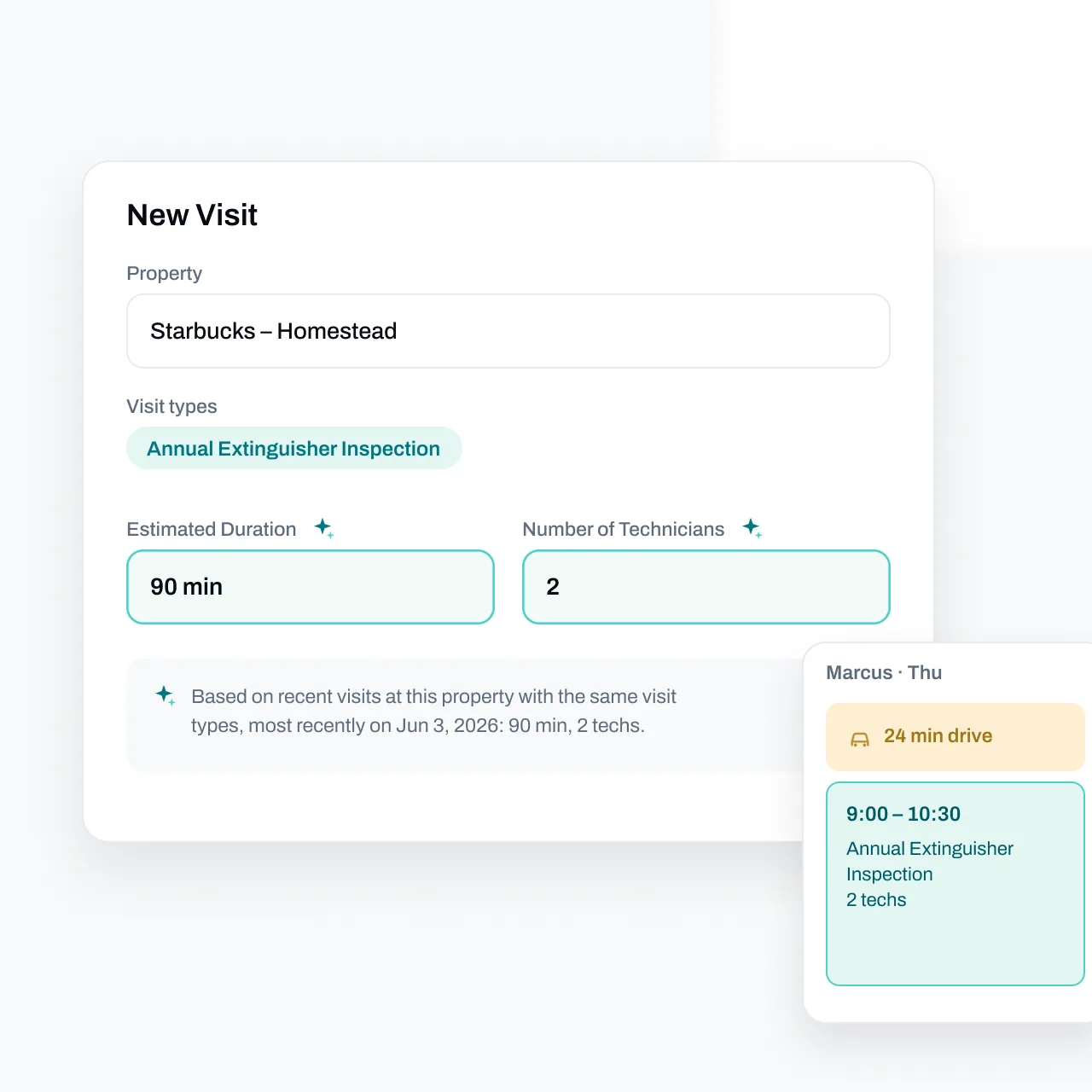
Suppose your third customer has two hundred extinguishers. After checking every unit on paper, you've still got to transfer the results into a customer report. Essential's fire extinguisher inspection software lets you record each unit's checks on a phone after scanning its barcode. The 30-minute demo shows how technicians use the checklist during a visit.
Fire Extinguisher Inspection Checklist for Monthly Inspections
Employees who know how to spot damage, obstructions, missing seals, and gauge abnormalities can handle monthly visual inspections in-house. Formal training or certification generally isn't required for these basic checks. Annual maintenance calls for professional servicing and may require certification.
Use this checklist during monthly inspections:
- Location & Accessibility: Check that the extinguisher is in its designated spot and unobstructed.
- Physical Condition: Check for dents, corrosion, or other damage.
- Pressure Gauge: Verify the needle is in the green zone, indicating proper pressure.
- Seal & Tamper Indicator: Confirm the safety seal is intact and the pin is secure.
- Label & Instructions: Check that the label is legible and instructions are clear.
- Hose & Nozzle: Inspect for cracks, blockages, or damage.
- Weight Check: Lift to feel if the extinguisher is full; significant weight loss may indicate leakage.
- Inspection Tag: Update the inspection date and initials on the tag.
Print the Fire Extinguisher Inspection Checklist for Monthly Inspections to use on site.
Check for a separate monthly log before treating a blank tag as missing documentation. Our guide to monthly inspection entries and annual maintenance tags explains what to record.
Annual Fire Extinguisher Maintenance and Professional Inspections
Have a certified professional handle annual maintenance. They'll:
- Disassemble the extinguisher to inspect internal components if the service requires it.
- Replace or recharge the extinguishing agent if necessary.
- Perform hydrostatic testing as required.
- Keep accurate records of all inspections and maintenance on fire extinguisher tags and/or in inspection reports.
Use the internal maintenance and hydrostatic testing intervals above to check which service is due for each extinguisher at the annual visit.
Our guide to pricing fire extinguisher inspections separates included service from additional work. Travel and labor affect the visit price; reporting time belongs in the quote, too.
How to Find a Licensed Professional for Annual Fire Extinguisher Maintenance and Inspections
Check that the business is licensed for fire extinguisher maintenance and inspections before you book annual service. Search your city or surrounding area on Google or Yelp, then contact several businesses for quotes.
Ask other business owners or operators for contractor referrals.
Keep the Checks and Records Current
Keep regular fire extinguisher inspections on your inspection schedules. File the completed checklists with the maintenance records so you can produce them during routine property inspections by Authorities Having Jurisdiction (AHJs).
Before sending a report to a customer or an AHJ, check it against what a fire inspection report must include.
Digital Checklists and Inspection Reports
Finish the mobile checklist, and Essential's fire extinguisher inspection software generates the report using the entries you've already made.