
Delaware puts the State Fire Marshal in the middle of nearly everything a fire protection contractor does: the office licenses your company, certifies the individual who signs off on work, reviews your plans, and publishes the quality assurance forms your annual inspections get recorded on. Three counties, one regulator. That concentration makes Delaware simpler than most states to learn and less forgiving to wing.
The regulatory structure
The State Fire Prevention Commission, created by Title 16, Chapter 66 of the Delaware Code, adopts the Delaware State Fire Prevention Regulations (DSFPR). The Office of the State Fire Marshal enforces them through New Castle, Kent, and Sussex division offices plus an administrative division. Appeals and requests to do something a different way than the regulations prescribe go to the Commission as formal appeals or Requests for Alternative. The Fire Marshal's site references a 2026 DSFPR update, so pull the current text rather than working from an old bound copy.
Company licenses and certificate holders
Delaware licenses at two levels, laid out in the Fire Marshal's Fire Protection Licensing Applicant Guide:
- Company licenses for fire alarm and fire suppression companies, central station and remote station monitoring providers, and fire extinguisher companies.
- Individual credentials: the Fire Alarm Certificate Holder, the Fire Suppression System (FSS) Certificate Holder, and the fire extinguisher technician license. The sprinkler and standpipe program adds FSS V and In-House FSS variants, with exam requirements that point applicants toward NICET certification.
Certificate holders renew annually and carry the documentation burden for the company's work. Separate program pages cover extinguisher licensing, special hazards, and pre-engineered kitchen hood suppression, each with its own application packet. If you run multiple lines of business, expect multiple credentials, not one blanket license.
Named forms you'll actually file
Delaware is unusually concrete about ITM paperwork. The Fire Marshal's quality assurance program publishes, among others, the Fire Suppression Certificate of Inspection (annual), the Standpipe Certificate of Inspection (annual), and matching Deficiency Repair Forms. Those documents tie each system to a certificate holder and give the state a paper trail on deficiencies, not just passing inspections. Use the current versions from the Fire Marshal's site, and when a form question isn't answered there, ask the division office covering that county instead of improvising.
New work has its own submission tracks: fire alarm plan submittals, water-based and non-water-based suppression plans, and kitchen hood plans all route through the plan review and inspections program before systems go in.
Inspection frequencies
The annual Certificates of Inspection set Delaware's headline cadence for suppression and standpipe systems. Below that, the national ITM standards govern the detailed cycles contractors schedule against:
- NFPA 25: quarterly and annual water-based inspections, five-year internal assessments.
- NFPA 72: annual alarm testing, some devices more often.
- NFPA 10: annual extinguisher maintenance, 6-year teardowns, hydro tests.
- NFPA 96: hood cleaning by cooking volume, semiannual suppression service.
Which editions apply is a DSFPR question, and the regulations were just updated for 2026. Confirm the referenced editions in the current DSFPR text or with your division office before quoting a customer a multi-year schedule.
Where reports and certificates go
Plan submittals, licensing applications, and QA paperwork all flow to the Office of the State Fire Marshal, generally through the division office for the county where the building sits. Completed Certificates of Inspection document the annual and follow the state's QA program; the owner keeps records too. Deficiency Repair Forms close the loop on anything the inspection turned up. The Fire Marshal's own program pages are the authority on how each document travels; if a county division office wants something extra, get it from them directly.
Making the certificate-holder model work for you
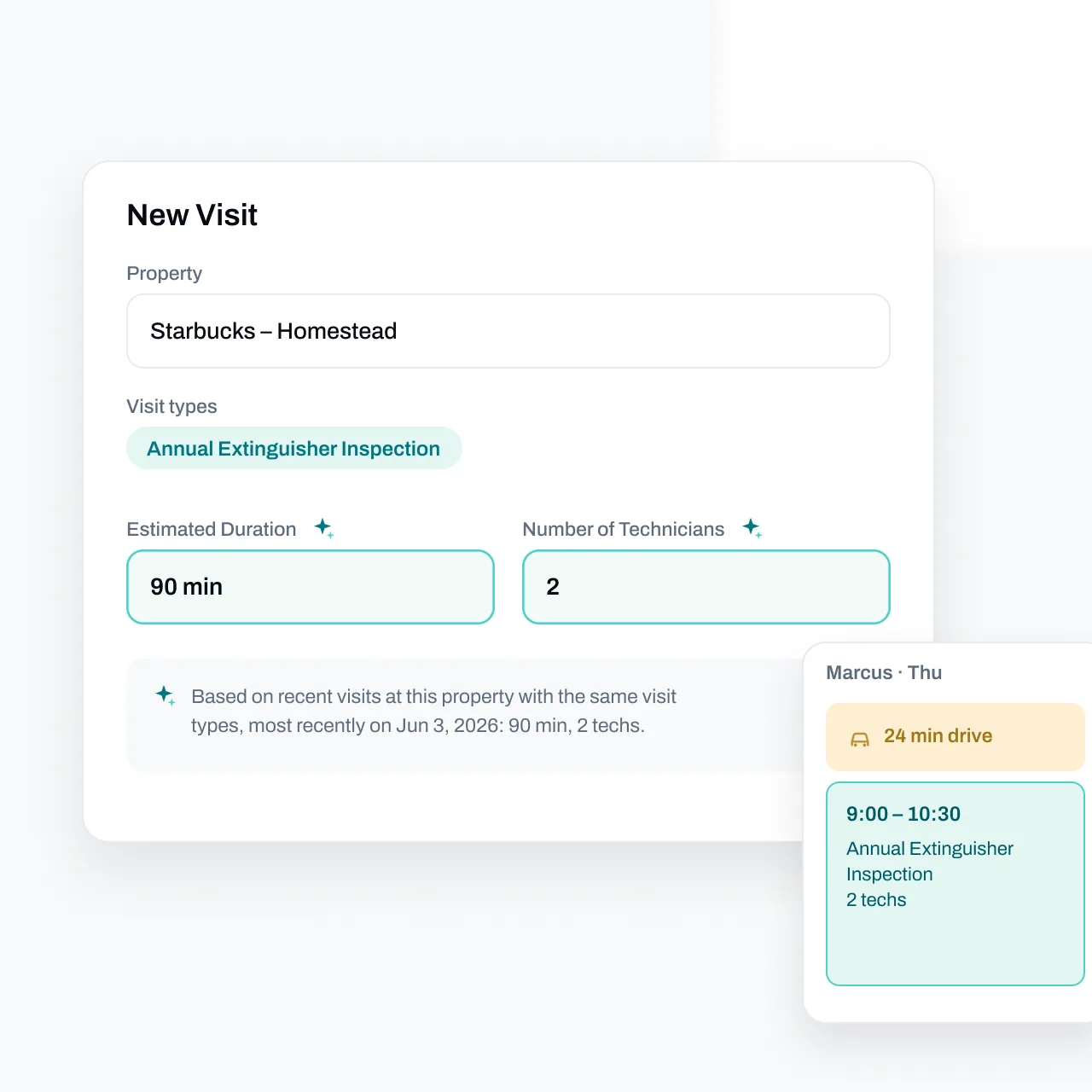
Delaware's system concentrates responsibility on a few named people in your company. When one FSS Certificate Holder is backstopping forty annual certificates, the office needs to know which buildings are due, which deficiencies are still open, and which reports haven't gone out. Essential gives you that in one place: automated scheduling by cycle, mobile sprinkler inspections, kitchen suppression inspections, and fire alarm reports that come out ready for the AHJ with the certificate holder's information attached, plus a deficiency queue so repair forms don't lag the inspection that found the problem. Book a demo and see the whole loop in 30 minutes.