
Connecticut slices sprinkler licensing thinner than almost any state. The Department of Consumer Protection issues F-1 through F-4 licenses for fire protection sprinkler work, separate F-5 and F-6 residential sprinkler credentials, and a stand-alone Fire Sprinkler System Layout Technician license. Send a tech with the wrong class to a job and the work is unlicensed, no matter how well it's piped.
Layer on a fire marshal in every municipality and you get a state where the licensing question and the "who do I report to" question have different answers in every town on the route.
Who regulates fire protection work in Connecticut
The Office of State Fire Marshal, inside the Department of Administrative Services, administers Connecticut's two fire codes: the Connecticut State Fire Safety Code and the Connecticut State Fire Prevention Code, the latter currently the 2018 Connecticut edition built on NFPA 1 (2015 edition). Code advisory committees handle updates, so watch for a new edition cycle and confirm which edition your AHJ is enforcing before you cite chapter and verse in a report.
Enforcement is local. Connecticut statute (Chapter 541) establishes local fire marshals with inspection authority in each community, and those offices, not Hartford, are the AHJs your inspection reports serve.
Licensing: sprinkler classes and electrical classes
Sprinkler licensing follows Connecticut's contractor-and-journeyperson pattern. Per the DCP licensing page, you hold a journeyperson license for at least two years before sitting for the contractor exam, contractor applications run $150 and journeyperson $90, and F-1 through F-4 licenses expire October 31 each year. Budget for the layout technician renewal separately; it expires January 31.
Fire alarm work runs through the electrical licensing system instead. DCP's electrical license scopes put "low voltage, alarm or signal work" under the limited classes: L-5 contractors and L-6 journeypersons up to 25 volts, C-5 and C-6 up to 48 volts with telephone-interconnect included, with E-1 and E-2 unlimited licenses covering everything. Which class fits depends on the systems you touch, so match the scope language to your service mix rather than assuming an alarm card exists; Connecticut doesn't issue one by that name.
Extinguisher servicing has no DCP trade license on that list. The work still has to follow NFPA 10 under the fire codes, and some local fire marshals look closely at service tags during their inspections. When you take on extinguisher accounts, confirm expectations with the town fire marshal first.
Forms, records, and what your report has to prove
Connecticut hasn't created a statewide inspection report form or a central e-filing system for contractor ITM reports. What the codes demand is the underlying record: NFPA 25 documentation for water-based systems, NFPA 72 records of completion and inspection for alarms, NFPA 10 tags and maintenance records for extinguishers. Local fire marshals ask for those records during their own inspections, and a missing annual on paper reads the same to them as a missing annual in fact. Some offices want copies mailed or emailed after each visit; others only want them produced on request. Ask each one, and write the answer into the account file.
Inspection frequencies
Because the Fire Prevention Code is NFPA-based, the familiar cycles apply: quarterly and annual sprinkler work under NFPA 25, annual alarm testing under NFPA 72, monthly checks plus annual maintenance for extinguishers under NFPA 10, semiannual kitchen suppression service under NFPA 17A. Local fire marshals also run a statutory inspection program with a real clock on it: CGS 29-305(b) requires each local fire marshal to inspect all occupancies regulated by the Fire Safety Code or Fire Prevention Code at least once each calendar year, one- and two-family homes excepted, unless the State Fire Marshal has adopted a less frequent schedule for that building use under subsection (e), and subsection (f) mandates an annual inspection of every premises with an on-premises liquor permit. That cycle is often what shakes loose an overdue system inspection: the fire marshal walks the building, finds last year's tag, and your customer gets a notice. Contractors who get ahead of that call cycle keep customers out of trouble and keep competitors out of the building.
Where reports go
Take a crew working Hartford, West Hartford, and Farmington in one week. Three towns, three fire marshal offices, three sets of preferences about copies, follow-up, and re-inspection. None of it is exotic, but nothing about it is uniform either, and the contractor carries the tracking burden because the license on the wall is yours, not the building owner's.
Making the town-by-town model manageable
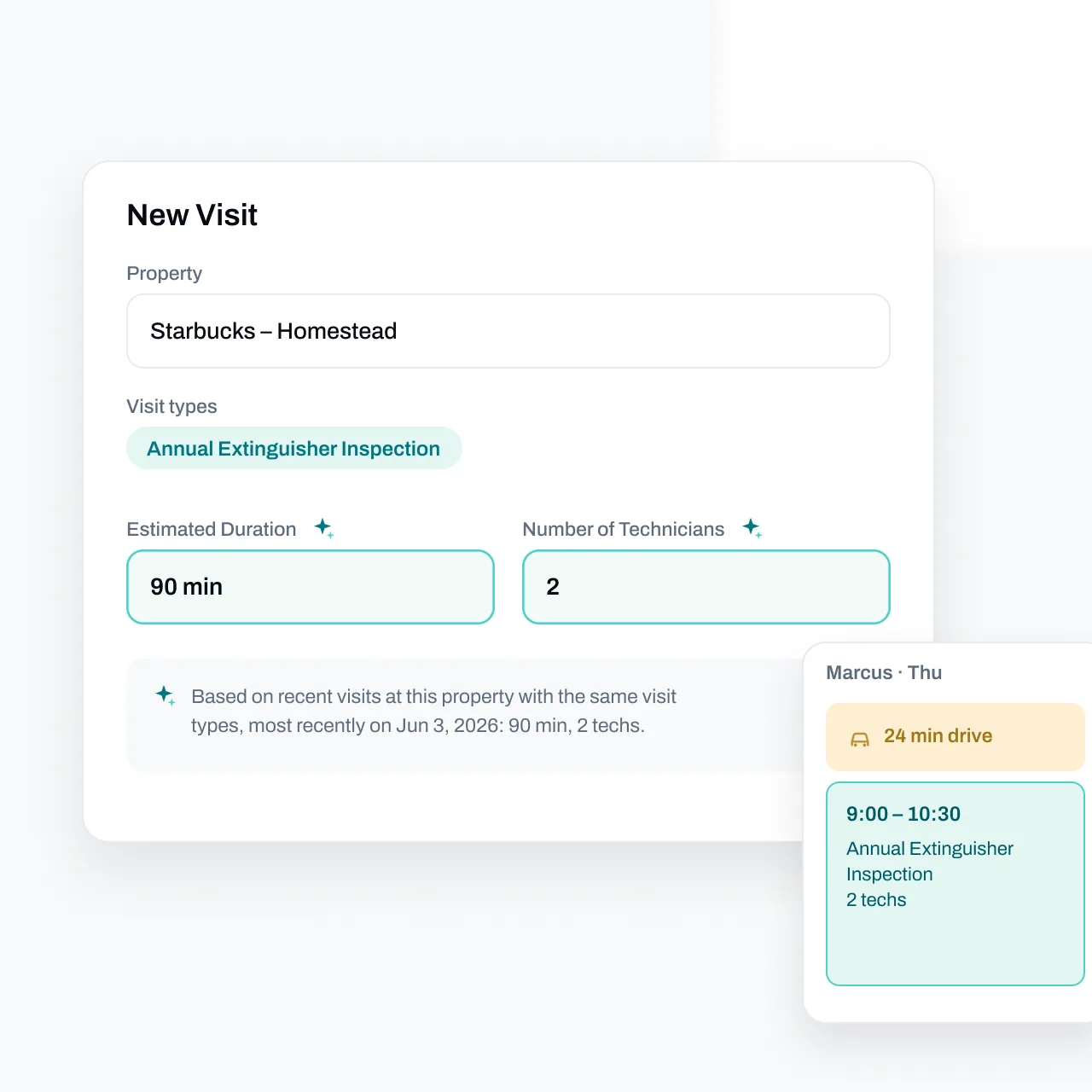
Essential turns that patchwork into a route you can actually run: automated scheduling for every account's NFPA cycle, mobile inspections that capture deficiencies with photos on the spot, and AHJ-ready reports formatted so any Connecticut fire marshal can read them without a phone call. Shops running sprinkler inspections and alarm testing under Connecticut's license classes use it to prove, town by town, that nothing slipped. Schedule a demo and bring your three-town week.