
If you inspect fire alarm systems in British Columbia, the standards question got settled a while ago: the BC Fire Code has required CAN/ULC-S536-19 for inspection and testing since March 2024, with CAN/ULC-S537-19 governing verification of new or altered systems. Ontario only caught up on January 1, 2026. The harder question in BC was never which edition. It's who is allowed to do the work, and whether the paperwork survives both the AHJ and ASTTBC.
Two rulebooks, not one
BC fire alarm compliance stacks two layers. The first is the standard: the current BC Fire Code, based on the National Fire Code of Canada 2020, references S536-19 for the recurring annual and monthly inspection work and S537-19 for the one-time verification when a system is installed or altered. The second layer is the person. In much of the province, fire alarm inspection is regulated work, and the register is kept by ASTTBC, the Applied Science Technologists and Technicians of British Columbia. ASTTBC registers Registered Fire Protection Technicians (RFPTs) under the Professional Governance Act and holds them to a published Standard of Practice.
Endorsements: the part dispatch has to care about
RFPT registration is endorsement-based. A technician is registered for specific system types: AL for fire alarm systems, EX for portable extinguishers, EM for unit emergency lighting, WA for water-based systems. A tech carrying only the WA endorsement can inspect the sprinkler system, not the panel. For fire alarm annuals under S536-19, the tech on site needs the AL endorsement. On mixed-system buildings, that means either a multi-endorsement tech or two names on the work order.
The municipal patchwork
Here's the wrinkle that surprises shops moving into BC from other provinces: the RFPT requirement isn't provincial. It arrives through municipal bylaws, and about two dozen BC jurisdictions have enacted one, requiring RFPT registration to inspect and test the fire and life safety systems in buildings within their boundaries. Vancouver runs its own Fire By-law (No. 14419) and layers a pre-inspection certification process on top. Cross a city line and the standard stays the same while the personnel rules change. For a contractor running crews across Metro Vancouver, which tech you can send depends on which side of a municipal boundary the building sits on.
The paperwork is the same trap as everywhere else
S536-19 brought BC the same documentation regime Ontario contractors are now discovering: standardized report forms that may not be reworded or reformatted, device-by-device test records, battery load test values written down rather than “Battery: OK,” deficiency tracking to closure, monthly records that stay consistent with the annual, and owner sign-off. In BC there's an extra edge on it. An RFPT signs that report against ASTTBC's Standard of Practice. A sloppy or incomplete one risks a practice review for the registrant whose name is on it, on top of whatever the AHJ has to say.
A note on editions
ULC published CAN/ULC-S536:2024, a revision of the 2019 sixth edition, in August 2024; its headline addition is data communication link testing. The BC Fire Code references the 2019 editions, so S536-19 remains the enforceable standard in BC today. Some AHJs will accept the newer edition as meeting or exceeding it. That's their call, so confirm before switching templates. The model National Fire Code was updated again in December 2025, and provinces will work through their own adoption cycles over the next few years. It's the same lag that had Ontario adopting S536-19 on January 1, 2026, nearly two years after BC.
Where this actually bites: dispatch and documentation
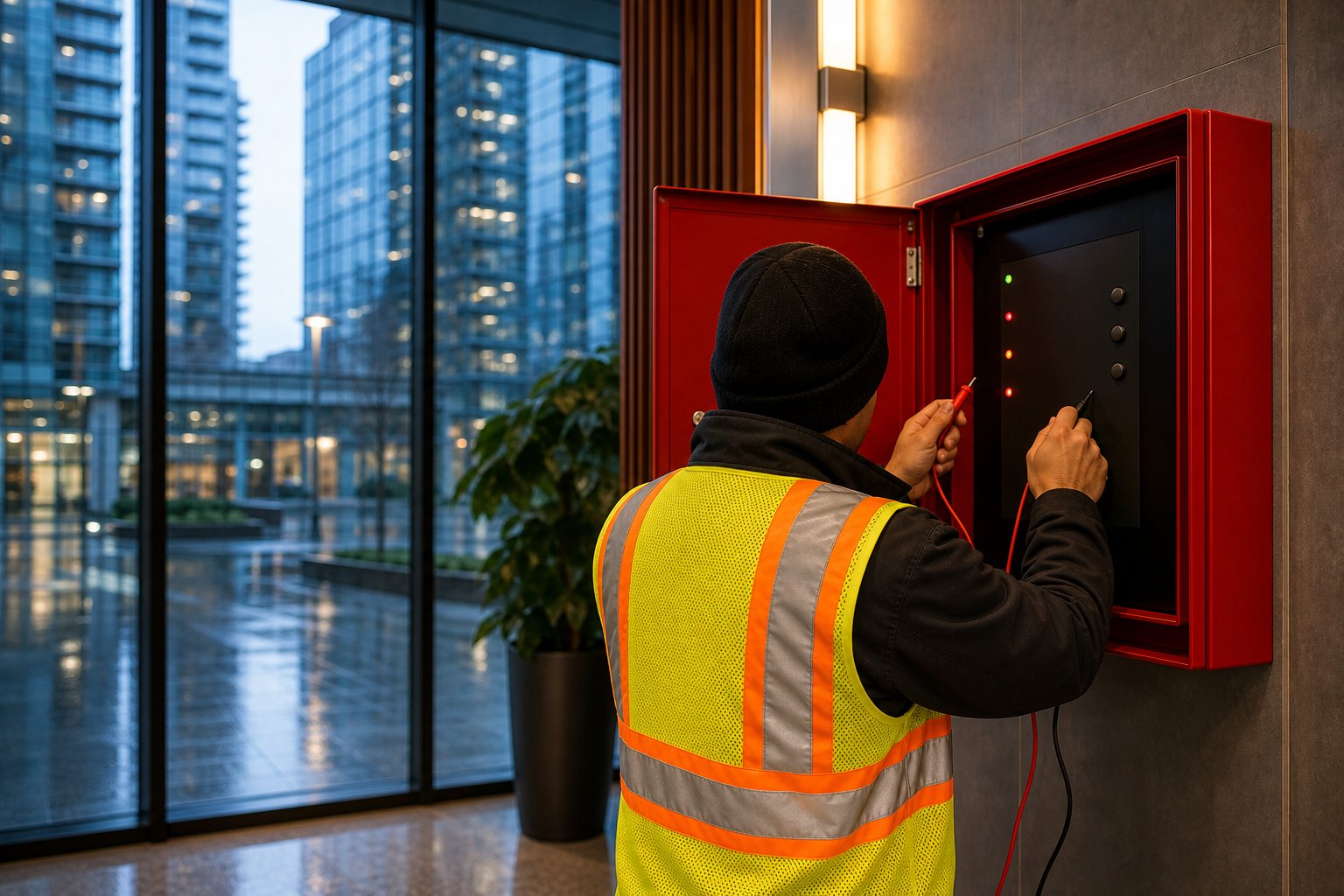
Most BC fire alarm techs know how to test a panel. The work that quietly eats hours is everything wrapped around it: confirming the tech you scheduled holds the right endorsement for that building in that municipality, then producing a report in the exact structure S536-19 requires, every time, with records that hold up when an AHJ or a practice review asks for them.
Say Monday's board has a Vancouver high-rise annual and your senior alarm tech calls in sick. Whoever covers needs their own registration with the AL endorsement before the truck rolls. Vancouver's by-law doesn't care how good the backup tech is, only whether they're on the register.
That's administrative surface area, and it's what Essential automates. The S536-19 report structure is built into the technician's mobile inspection app, so device-level records, battery values, and deficiencies get captured on site in the right structure.
Before your next inspection
The field work was never the hard part. Proving it, on the current standard, by the right technician, in the right jurisdiction, is where BC shops lose hours. If that's where your team is stuck, book a 15-minute walkthrough and watch Essential generate a complete S536-19 report from a live inspection.